Tag: training

  • Closing Knowledge, Skills and Motivation Gaps in UK Training

    Closing Knowledge, Skills and Motivation Gaps in UK Training

    Every successful workplace learning programme begins with a simple question. Why do employees need this training in the first place?

    Many organisations invest significant time and budget into e-learning without first identifying the real performance issue they are trying to solve. The result is often a course that delivers information but fails to change behaviour or improve performance. Whether you are training new starters, supporting compliance, or introducing new processes, understanding the gap you are trying to close should always come before designing the learning experience. For a closer look, read our guide to behaviour change in the workplace.

    Start by Identifying the Real Performance Gap

    When someone is not performing as expected, the answer is not always more training. In many cases, people already know what to do but choose not to do it, or they understand the theory but have not developed the confidence to apply it consistently.

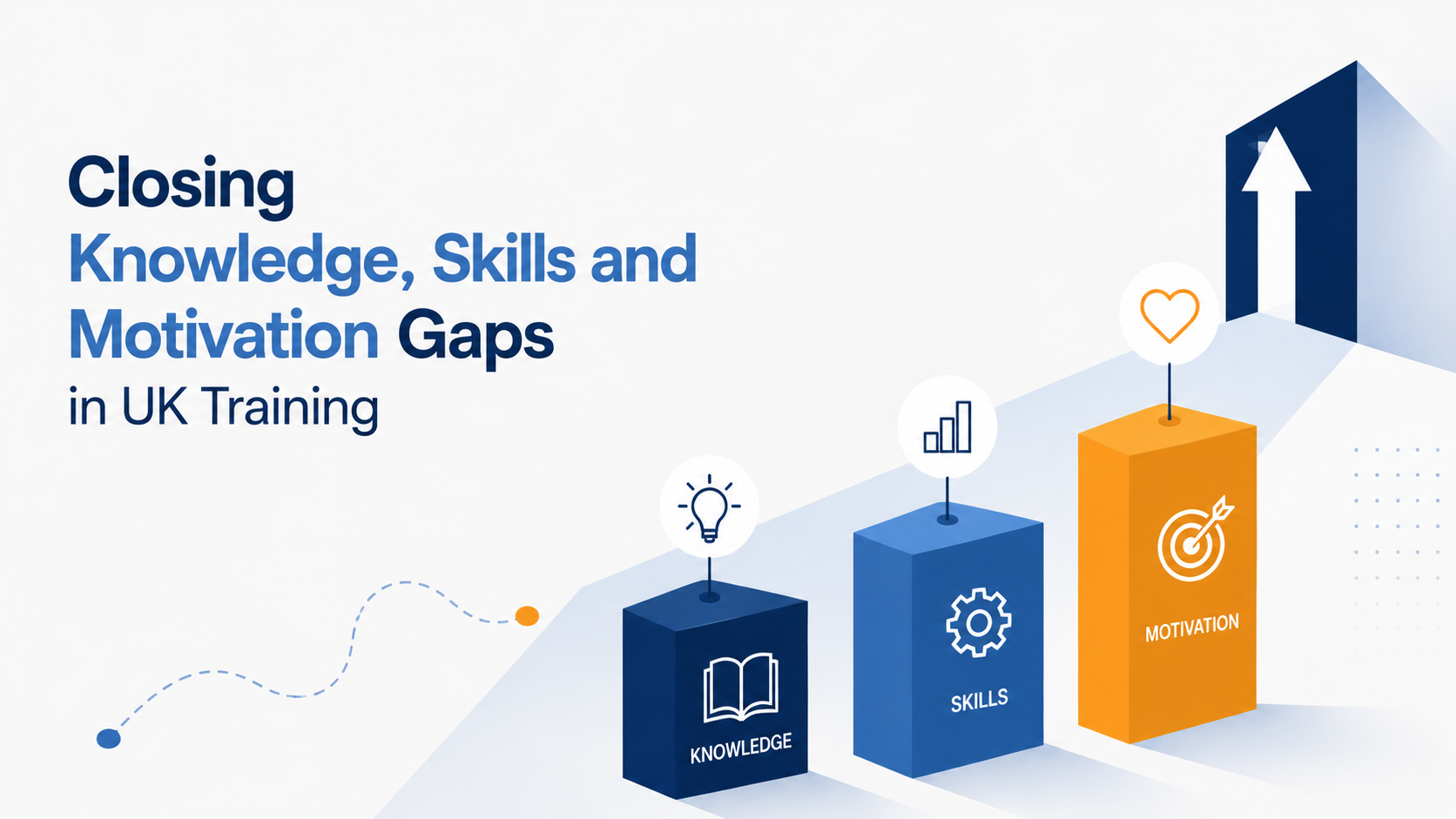
    Most workplace learning challenges fall into one of three areas. People either need new knowledge, they need to build practical skills, or they need stronger motivation to put what they already know into practice. Identifying which of these applies will shape every decision you make about the course, from the content to the activities and assessments.

    When Employees Need Better Knowledge

    A knowledge gap exists when learners need information they do not currently have. This often happens during onboarding, when introducing new products or services, or when communicating changes to legislation, internal policies, or business procedures. Our guide to planning employee onboarding training goes into more detail.

    However, providing facts alone rarely changes workplace performance. Employees are much more likely to remember information when they understand how it applies to their day-to-day responsibilities.

    For example, a sales team does not simply need a list of product features. They need to understand which customer problems the product solves, which conversations it supports, and how those benefits can be explained confidently during a sales meeting. Knowledge becomes more valuable when learners can see how to use it in realistic situations.

    Skills Require Practice, Not Just Information

    One of the most common mistakes in digital learning is treating skills as though they are simply another form of knowledge.

    A useful way to tell the difference is to ask whether learners can perform successfully immediately after receiving the information. If they need repeated practice before becoming competent, the gap is one of skill rather than knowledge.

    Presentation techniques, leadership conversations, customer service, software systems and safety procedures all require learners to apply what they have learnt. Reading about these activities is only the starting point. Confidence develops through realistic practice, feedback and repetition.

    This is why effective custom e-learning often includes branching scenarios, simulations and interactive exercises rather than relying solely on text or video content.

    Motivation Can Be the Missing Piece

    Sometimes employees already have the knowledge and the ability to perform well, yet their behaviour does not change.

    This motivation gap is frequently overlooked because it cannot be solved simply by adding more content. The underlying issue may be uncertainty about why a change is happening, lack of confidence, resistance to new ways of working, or limited understanding of how the change benefits both the organisation and the individual.

    Employees may also lose focus over time or become disengaged if previous training felt irrelevant.

    In these situations, the learning experience should explain the purpose behind the change, demonstrate its value, and encourage participation through relevant examples and engaging interactions. When people understand the reasons for change, they are far more likely to adopt new behaviours.

    Choosing the Right Learning Approach

    Once you have identified the type of gap, selecting the appropriate learning methods becomes much easier.

    Knowledge-based learning benefits from clear explanations, practical examples and opportunities to apply information in realistic contexts.

    Skills development should include activities that allow learners to practise repeatedly before applying their learning in the workplace. Interactive scenarios, simulations and AI-powered learning tools can all help learners build confidence in a safe environment. Our guide to Kolb’s learning cycle goes into more detail.

    Motivation-focused learning requires a different emphasis. The content should connect organisational objectives with individual benefits, explain expectations clearly and create an engaging experience that keeps learners involved from beginning to end.

    The most effective programmes often combine all three approaches because workplace performance rarely depends on a single factor.

    A UK Compliance Perspective

    Many UK organisations deliver mandatory training covering areas such as health and safety, information security and data protection. While these subjects often appear to focus on compliance, simply providing information is rarely enough.

    For example, employees handling personal information need to understand not only the principles of the UK GDPR and the Data Protection Act 2018, but also how to apply those principles in everyday situations. Similarly, health and safety training should help employees recognise hazards and make safe decisions rather than memorising regulations.

    This practical approach aligns with guidance from organisations such as the CIPD and the HSE, both of which promote learning that supports real workplace performance instead of simple knowledge recall.

    Designing Training That Delivers Results

    Successful e-learning is not measured by course completion alone. Its value comes from helping people perform better at work.

    Before creating any learning programme, spend time identifying whether the challenge is a lack of knowledge, a shortage of practical skills, or a problem with motivation. Once that question has been answered, every aspect of the learning design becomes more focused and more effective.

    Whether you are developing compliance training, leadership programmes or custom digital learning, matching the learning strategy to the actual performance gap gives learners a far better chance of applying what they have learnt and delivering measurable improvements across the organisation.

    Frequently asked questions

    What is a performance gap?

    A performance gap is the difference between what people are doing now and what the organisation needs them to do. Identifying the cause of the gap is the first step, because not every gap can be fixed with training.

    How do you tell if a problem is knowledge, skills or motivation?

    Ask whether the person could do the task if their job depended on it. If they could not, it is a knowledge or skills gap: knowledge if they do not know what to do, skills if they know but cannot yet do it well. If they could but do not, the cause is motivation or the environment.

    Can training fix a motivation gap?

    Only partly. Training can explain why something matters and build confidence, but motivation is also shaped by managers, workload, incentives and culture. If those work against the behaviour, training alone will not change it.

    What is a training needs analysis?

    A training needs analysis looks at the skills and knowledge a role needs, compares them with what people can currently do and identifies the gaps. It helps you decide what training is needed, who needs it and whether training is the right answer at all.

    See your own training as e-learning, free

    Send us one document and we will turn it into an interactive demo module, so you can judge the quality before you spend anything.

  • Writing Effective Learning Objectives for UK Workplace Training

    Writing Effective Learning Objectives for UK Workplace Training

    Many UK organisations invest in workplace learning with clear business goals in mind. They may want to improve compliance, develop leadership skills, reduce errors or help teams adopt new systems. Yet many training programmes fall short because employees are never told exactly what success looks like.

    That is where learning objectives make a difference. A well-written learning objective sets a clear expectation from the beginning. It explains what learners should be able to do after completing the course and gives trainers a practical way to measure whether the learning has achieved its purpose. Whether you are creating custom e-learning, delivering IOSH-approved safety training or rolling out courses through the Capytech LMS, clear objectives provide the foundation for effective learning.

    Start with the Outcome, Not the Content

    Many organisations begin by thinking about what information they want to include in a course. A better approach is to decide what learners should be capable of doing when the training finishes.

    For example, imagine a customer service programme. A vague objective might read:

    “After completing this course, you will understand good customer service.”

    Although this sounds reasonable, it is difficult to measure. How do you prove someone understands a topic?

    A stronger objective focuses on observable behaviour instead:

    “After completing this course, you will be able to resolve common customer enquiries using the organisation’s approved service process.”

    This version makes expectations clear and provides a practical standard against which performance can be assessed.

    Why Good Learning Objectives Matter

    Well-defined learning objectives benefit both learners and organisations.

    Learners understand why they are completing the training and what they are expected to achieve. This often increases engagement because the purpose of the course is obvious from the outset.

    For course designers, learning objectives help shape every decision. They influence the content, activities, assessments and scenarios that appear throughout the programme, reducing unnecessary material and keeping the course focused.

    They also make it easier to evaluate return on investment. When objectives describe measurable behaviours, organisations can compare employee performance before and after training instead of relying only on completion rates.

    What Makes a Strong Learning Objective?

    Effective learning objectives share several characteristics.

    They are specific enough that learners know exactly what success looks like. They use straightforward language that avoids misunderstanding and focuses on a single outcome. They are realistic, taking account of the learner’s experience and available time. Most importantly, they can be measured through observation, assessment or practical application.

    If an objective tries to cover too many skills, it is usually better to divide it into several smaller objectives. This approach works particularly well in modern microlearning programmes, where each short module focuses on one measurable outcome before moving to the next.

    A Practical Method for Writing Learning Objectives

    Creating effective objectives becomes much easier when you follow a logical process.

    Begin by understanding the organisational goal. Perhaps the business wants managers to conduct better performance reviews or reduce workplace incidents. That business objective should inform the training, but it should not become the learning objective itself.

    Next, think about the learners. Consider their existing knowledge, daily responsibilities and the level of improvement that is realistic.

    Finally, describe one behaviour the learner should demonstrate after training. Choose language that can be observed or assessed rather than words that describe internal understanding.

    Using Bloom’s Taxonomy to Choose Better Action Verbs

    Bloom’s Taxonomy remains one of the most widely used frameworks for writing learning objectives. Originally developed by educational psychologist Benjamin Bloom and later revised, it helps instructional designers match objectives to different levels of learning.

    Each level suggests action verbs that are easier to assess than broad terms such as “know” or “understand”.

    The six levels are:

    Remember focuses on recalling information, such as company procedures or safety rules. Multiple-choice assessments often work well for this level.

    Understand involves explaining ideas or describing processes. Learners might summarise a policy or explain how a product works.

    Apply asks learners to use new knowledge in practical situations. For example, they may complete a task using newly introduced software or follow a revised operating procedure.

    Analyse requires learners to examine information, identify patterns or compare options. A manager interviewing candidates or reviewing workplace data would be working at this level.

    Evaluate involves making informed judgements. Learners may assess risks, review business performance or recommend improvements based on evidence.

    Create represents the highest level, where learners produce something original. This could include writing a project plan, designing a customer journey or preparing a marketing proposal.

    Selecting the right action verb makes objectives clearer and makes assessment much easier.

    Align Learning Objectives with UK Workplace Requirements

    Many UK organisations deliver training that supports legal or professional responsibilities. In these situations, learning objectives should reflect the standards employees are expected to meet in their roles.

    For example, compliance programmes may support responsibilities under the UK GDPR and the Data Protection Act 2018, while health and safety training may reinforce HSE guidance. Leadership programmes often align with frameworks promoted by the CIPD, helping organisations develop consistent management capability.

    Connecting learning objectives to recognised UK standards helps learners understand why the training matters and provides managers with meaningful measures of success.

    Write Objectives Before Building the Course

    One of the most common mistakes in e-learning development is writing learning objectives after the content has already been created.

    The opposite approach produces better results. Define the objectives first, then build every activity, assessment and scenario around them.

    This keeps the course focused and avoids adding content that does not contribute to the intended outcome. It also makes future updates easier because every part of the programme has a clear purpose.

    Whether you are developing a custom e-learning solution or delivering training through the Capytech LMS, strong learning objectives provide a clear direction from the first planning meeting through to learner assessment.

    Final Thoughts

    Learning objectives may only take a short time to write, but they influence every stage of course development. They give learners a clear destination, help designers make better content decisions and allow organisations to measure whether training has delivered real improvements.

    When objectives are specific, measurable and centred on learner performance, workplace training becomes easier to evaluate and far more likely to produce lasting results.

    Frequently asked questions

    What is the difference between learning objectives and learning outcomes?

    A learning objective states what the training is designed to achieve, written from the learner’s point of view before the course is built. A learning outcome describes what the learner can actually do once the training is finished, and is what you assess. In practice, well written objectives become the outcomes you measure.

    How do you write a good learning objective?

    Start with who the learner is, then use a single action verb that can be observed, the conditions they will work under and the standard they must meet. For example: by the end of the module, a supervisor will be able to complete a risk assessment for a new task using the company template, with no hazards missed. Avoid verbs such as understand or know, because you cannot see or measure them.

    How many learning objectives should a course have?

    Most short workplace modules work best with three to five objectives. If you have many more, the course is probably trying to do too much and should be split into smaller modules.

    How do you use Bloom’s taxonomy to write learning objectives?

    Bloom’s taxonomy gives you action verbs for each level of thinking, from remembering and understanding up to analysing, evaluating and creating. Choose the level the job really needs, then pick a verb from it, such as identify for recall or prioritise for evaluation. Our guide to Bloom’s taxonomy for workplace e-learning shows how.

    See your own training as e-learning, free

    Send us one document and we will turn it into an interactive demo module, so you can judge the quality before you spend anything.
  • Scenario-Based Learning for UK Workplace Training

    Scenario-Based Learning for UK Workplace Training

    Every organisation wants training that changes how people work, not simply how much information they can remember. Whether you’re introducing new managers, improving customer service, strengthening cyber awareness or supporting health and safety, employees need opportunities to apply what they have learnt in realistic situations.

    That is where scenario-based learning makes a real difference. Rather than reading information or watching presentations, learners are placed in situations that reflect everyday workplace challenges. They make decisions, see the consequences of those decisions and build confidence before facing similar situations on the job. For UK employers, this practical approach can improve engagement while supporting stronger business performance.

    What Is Scenario-Based Learning?

    Scenario-based learning is a type of experiential learning where people develop knowledge and skills by taking part in realistic activities rather than simply absorbing information. Instead of being passive learners, employees become active participants who solve problems, make choices and learn from the outcomes. Our guide to active learning in the workplace goes into more detail.

    Within digital learning, scenarios can recreate workplace situations that employees encounter every day. These experiences encourage learners to think critically, apply existing knowledge and practise new skills in an environment where mistakes become valuable learning opportunities rather than costly business errors.

    Because the learning takes place individually, many employees also feel more comfortable experimenting with different decisions than they would during classroom role-play exercises.

    Why Organisations Are Choosing Scenario-Based Training

    Traditional learning often explains what employees should do. Scenario-based learning asks them to put that knowledge into practice.

    By working through realistic situations, learners strengthen both technical knowledge and workplace behaviours. They must analyse information, make decisions and respond to changing circumstances, making the learning experience far more memorable than reading policies or completing simple knowledge checks.

    Effective scenario-based learning usually encourages learners to:

    • practise skills in realistic but safe environments
    • make decisions based on workplace situations
    • experience the consequences of different choices
    • develop problem-solving and critical thinking abilities
    • apply previous learning in meaningful contexts
    • strengthen communication, teamwork and professional judgement alongside technical skills

    Different Ways to Use Scenario-Based Learning

    There is no single format for scenario-based learning. The most suitable approach depends on the skills being developed and the complexity of the subject matter.

    Decision-based scenarios present learners with a workplace challenge that requires a series of informed choices. These activities are particularly useful for management, customer service and compliance training.

    Branching scenarios build on this idea by allowing learners to follow different paths depending on the decisions they make. Each choice creates a different outcome, helping employees understand how small decisions can have wider consequences.

    Simulation-based learning allows learners to practise processes using software, equipment or virtual environments. This approach works particularly well for systems training, technical procedures and operational tasks where repeated practice builds confidence. For a closer look, read our guide to headsets or virtual environments.

    The technology behind these experiences can range from simple interactive exercises through to immersive virtual or mixed reality environments, depending on training objectives and budget.

    Where Scenario-Based Learning Delivers the Greatest Value

    Almost any workplace subject can include scenarios, but some training areas benefit more than others.

    Cybersecurity awareness becomes more engaging when learners identify phishing attempts or respond to simulated security incidents. Compliance training feels more relevant when employees work through genuine ethical dilemmas rather than memorising regulations.

    Customer service teams can practise difficult conversations before speaking with real customers, while sales professionals can improve questioning and objection-handling techniques through realistic interactions.

    Scenario-based learning is also highly effective for leadership development, health and safety, critical thinking and roles involving operational or financial risk.

    The Building Blocks of an Effective Learning Scenario

    Strong scenarios are carefully designed rather than simply adding interaction for its own sake.

    Everything starts with a believable workplace situation that learners can recognise. This context helps them understand why the activity matters and encourages greater engagement.

    Within that situation, learners are given a challenge to solve or a task to complete. They then make decisions based on the information available, just as they would in the workplace.

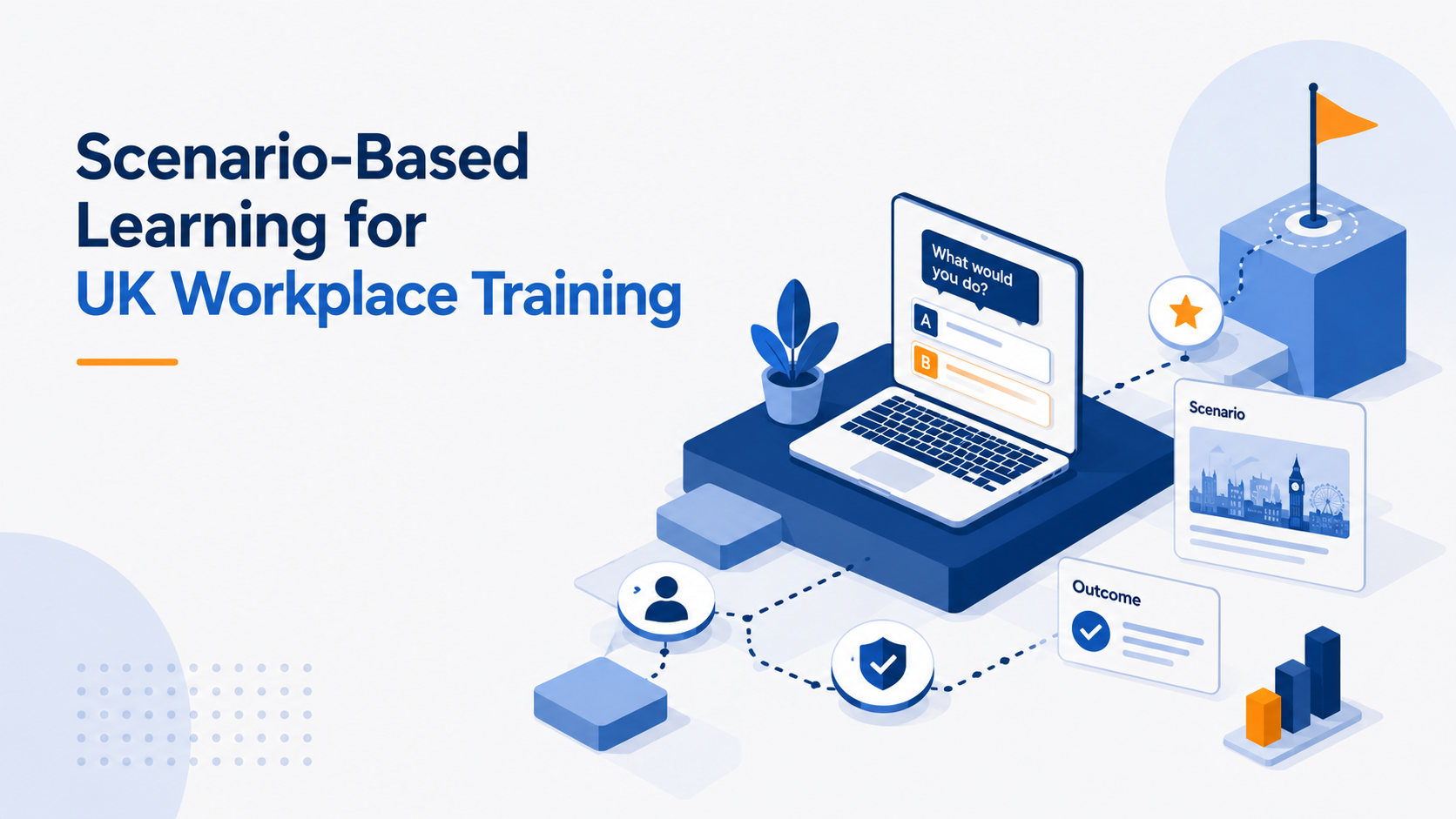
    Each decision leads to realistic outcomes that demonstrate the impact of their actions. Most importantly, learners receive immediate feedback explaining why particular choices were effective or where improvements could be made. The objective is continuous learning rather than testing alone.

    Supporting UK Compliance and Workplace Standards

    For many UK organisations, scenario-based learning is particularly valuable when training supports regulatory or legal responsibilities.

    Interactive scenarios can help employees understand responsibilities under the UK GDPR and the Data Protection Act 2018, practise safe working procedures that align with Health and Safety Executive (HSE) guidance, or respond appropriately to workplace situations covered by UK employment law. Scenarios also suit the evacuation, invacuation and lockdown procedures that venues in scope of Martyn’s Law will need, which our guide to Martyn’s Law training requirements covers.

    Because learners experience realistic consequences in a controlled environment, organisations can reinforce good judgement before employees encounter similar situations in their day-to-day roles. This approach can also provide stronger evidence of meaningful learning than relying solely on presentation-based courses.

    When Should You Choose Scenario-Based Learning?

    Scenario-based learning is most effective when employees need more than theoretical knowledge.

    If success depends on making good decisions, applying professional judgement or performing tasks correctly under pressure, realistic practice can significantly improve confidence and competence. Our guide to Merrill’s principles of instruction goes into more detail.

    It is especially useful where mistakes in the workplace could affect customer experience, employee safety, information security or regulatory compliance. Allowing learners to make those mistakes during training creates a safer route to developing capability.

    Turning Learning into Better Workplace Performance

    The best workplace learning helps employees transfer knowledge into everyday practice. Scenario-based learning supports this by giving learners opportunities to think, decide and act in situations that mirror their real responsibilities.

    For organisations investing in digital learning, interactive scenarios can increase engagement, improve knowledge retention and shorten the time it takes employees to become fully competent. Combined with Capytech’s bespoke e-learning development, AI-powered learning tools and the Capytech LMS, scenario-based learning creates training that is practical, measurable and closely aligned with business goals.

    Frequently asked questions

    What is scenario-based learning?

    Scenario-based learning puts learners in a realistic situation from their job and asks them to make decisions. They see the consequences of each choice and get feedback, so they practise applying knowledge rather than just recalling it.

    How do you create scenario-based training?

    Start with a real situation where people need to make a judgement, ideally one taken from incidents or experienced staff. Write the decision points and the realistic options, including the common mistakes, then show the consequence of each choice and explain the better approach. Test it with real employees before launch.

    Why is scenario-based training important?

    Many workplace failures are not caused by a lack of knowledge but by poor decisions under pressure. Scenarios let people practise those decisions safely, which builds confidence and makes it more likely they will do the right thing on the job.

    What is scenario-based training in aviation?

    In aviation, scenario-based training places pilots in realistic flight situations, rather than practising manoeuvres in isolation. The aim is to develop judgement, risk management and decision making alongside handling skills.

    See your own training as e-learning, free

    Send us one document and we will turn it into an interactive demo module, so you can judge the quality before you spend anything.
  • Asynchronous Learning in UK Workplaces: Common Challenges

    Asynchronous Learning in UK Workplaces: Common Challenges

    Why Asynchronous Learning Is Growing in the UK

    Flexible learning has become a standard part of workplace development across the UK. Whether employees are based in an office in Manchester, working remotely from home, or splitting their time between locations, organisations increasingly need training that can fit around different schedules. Our guide to hybrid workplace training strategies goes into more detail.

    This is where asynchronous learning comes in. Instead of requiring everyone to attend a session at the same time, learners complete training independently when it suits them. E-learning courses, training videos, digital knowledge bases, workplace guides and on-the-job learning activities are all examples of asynchronous learning.

    The approach offers clear advantages. Employees can progress at their own pace, training can be tailored to different skill levels, and organisations can reduce the costs associated with classroom delivery. Well-designed digital learning can also improve engagement by allowing learners to access content when they are most ready to focus.

    However, flexibility alone does not guarantee success. Organisations must address several common challenges if they want asynchronous learning programmes to deliver meaningful results.

    Keeping Learners Engaged Without a Classroom Environment

    One of the biggest differences between asynchronous learning and instructor-led training is the absence of a shared learning experience. Learners are not sitting alongside colleagues, asking questions in real time, or participating in group discussions throughout the day.

    Without those interactions, some employees can feel disconnected from the learning process. Engagement may fall, particularly if training consists only of reading materials or lengthy presentations.

    The solution is to build interaction into the learning experience. Custom e-learning courses can include scenario-based activities, knowledge checks, reflective exercises and collaborative tasks that encourage active participation. Organisations can also create opportunities for discussion through workplace learning communities, team meetings or dedicated learning channels.

    Many UK employers combine asynchronous learning with occasional live sessions. A short virtual question-and-answer session or coaching workshop can provide valuable human interaction without sacrificing flexibility.

    Supporting Learners Who Need More Structure

    The freedom to learn at any time is one of the main attractions of asynchronous learning. At the same time, that freedom can create difficulties for employees who struggle with prioritisation, time management or motivation.

    Some learners thrive when given autonomy. Others need more guidance to stay on track.

    Organisations can improve completion rates by establishing clear expectations from the outset. Learners should understand why the training matters, what outcomes are expected, and when activities need to be completed. Breaking content into shorter microlearning modules can also make training feel more manageable, especially for employees balancing learning with busy workloads.

    Regular communication from managers and learning teams helps maintain momentum. Simple progress reminders, milestone check-ins and individual support can prevent learners from falling behind.

    Providing Feedback at the Right Time

    Immediate feedback is one of the strengths of traditional classroom training. Learners can ask a question and receive clarification within seconds.

    In asynchronous programmes, there is often a delay between a learner encountering a problem and receiving an answer. This can create frustration and reduce confidence, particularly when employees are learning new processes or technical skills.

    Effective digital learning addresses this challenge by anticipating common questions. Frequently asked questions, knowledge resources and built-in guidance can provide support when learners need it most.

    Feedback should also be meaningful. Rather than simply marking an answer as correct or incorrect, training should explain why a choice was right or wrong. This approach helps learners understand the reasoning behind decisions and encourages long-term knowledge retention.

    Overcoming Technology Barriers

    Technology plays a central role in most asynchronous learning programmes. If systems are difficult to use, learners can become discouraged before they engage with the content itself.

    The first step is understanding how employees will access training. Some organisations provide company devices, while others rely on employees using their own equipment. Training platforms and content should work reliably across the devices and browsers learners are most likely to use.

    User experience also matters. Clear navigation, straightforward instructions and accessible design reduce confusion and support a better learning experience. Learning platforms such as the Capytech LMS can help by providing a central location for training, progress tracking and learner support.

    Organisations should also recognise that digital confidence varies significantly across the workforce. Providing technical guidance and access to support can remove barriers that might otherwise prevent participation.

    Meeting UK Compliance and Accessibility Expectations

    A consideration that is often overlooked is compliance. Organisations delivering digital learning in the UK should ensure their systems and processes align with legal and accessibility requirements.

    Learner data must be handled in accordance with the UK GDPR and the Data Protection Act 2018. Employers should also consider accessibility standards so that employees with different needs can participate fully in training activities.

    Accessibility is not simply a compliance exercise. Features such as captions, transcripts, keyboard navigation and clear content structure improve the learning experience for everyone. Organisations that design inclusively often see higher engagement and completion rates across their workforce.

    Making Asynchronous Learning Work

    Asynchronous learning gives organisations a practical way to deliver training at scale while accommodating different schedules, locations and learning preferences. The flexibility it offers is one of its greatest strengths, but it also introduces challenges that need to be managed carefully. For a closer look, read our guide to learning preferences in e-learning design.

    By creating engaging content, providing clear structure, offering timely feedback, supporting learners with technology and maintaining compliance with UK requirements, organisations can achieve strong results from asynchronous learning programmes.

    When combined with high-quality digital learning design and the right learning platform, asynchronous learning can become a highly effective part of a wider workplace learning strategy.

    Frequently asked questions

    What is asynchronous learning?

    Asynchronous learning is training that people complete in their own time rather than at a set time with a trainer, such as e-learning modules, recorded videos and discussion forums. Synchronous learning happens live, in a classroom or on a video call.

    What are the main challenges of asynchronous learning?

    Learners can feel isolated, put training off and lose motivation without a set time or a trainer to prompt them. It is also harder to get quick answers to questions and timely feedback.

    How do you make asynchronous learning engaging?

    Keep modules short, use realistic scenarios and interactive activities, and give feedback inside the course. Set clear deadlines, send reminders and give learners a way to ask questions, such as a forum or an AI tutor.

    Is asynchronous or synchronous learning better?

    Neither is better in every case. Asynchronous learning suits knowledge and policies and fits around shifts and different locations; synchronous learning suits discussion, coaching and practice. Most effective programmes combine the two.

    See your own training as e-learning, free

    Send us one document and we will turn it into an interactive demo module, so you can judge the quality before you spend anything.
  • Quality Assurance for E-Learning Projects in the UK

    Quality Assurance for E-Learning Projects in the UK

    Creating effective digital learning is about more than producing attractive content and interactive experiences. Whether you’re rolling out compliance training for a local authority, onboarding programmes for a growing business, or leadership development across a national organisation, quality matters at every stage.

    A single broken link, inaccurate statement, or confusing learner journey can reduce engagement and weaken learning outcomes. That is why quality assurance should be built into every e-learning project from the beginning, rather than treated as a final task before launch. The following practices can help UK organisations deliver learning that is accurate, reliable, and effective.

    Build Quality into the Development Process

    One of the most common mistakes in bespoke e-learning development is leaving testing until the course is nearly complete. This often results in a long list of issues that are difficult and expensive to resolve.

    A better approach is to review and test throughout the project lifecycle. Each draft, prototype, and content update should be assessed before moving forward. Continuous quality checks reduce rework and make final approval much more straightforward.

    Review Every Learning Component

    E-learning courses contain many moving parts, and each element deserves attention during testing.

    Content should be checked for accuracy, spelling, grammar, and clarity. Graphics should reflect current branding and support the learning objectives. Video assets need reviewing for quality, subtitles, and playback performance. Audio should be clear, balanced, and free from technical issues. Navigation controls, menus, and interactive elements should work consistently across the course.

    Small issues in any of these areas can create frustration for learners and undermine confidence in the training.

    Use Structured Testing Criteria

    A documented QA checklist helps ensure consistency across reviews. It also prevents important checks from being overlooked when multiple people are involved in testing. Our guide to improving consistency in online training goes into more detail.

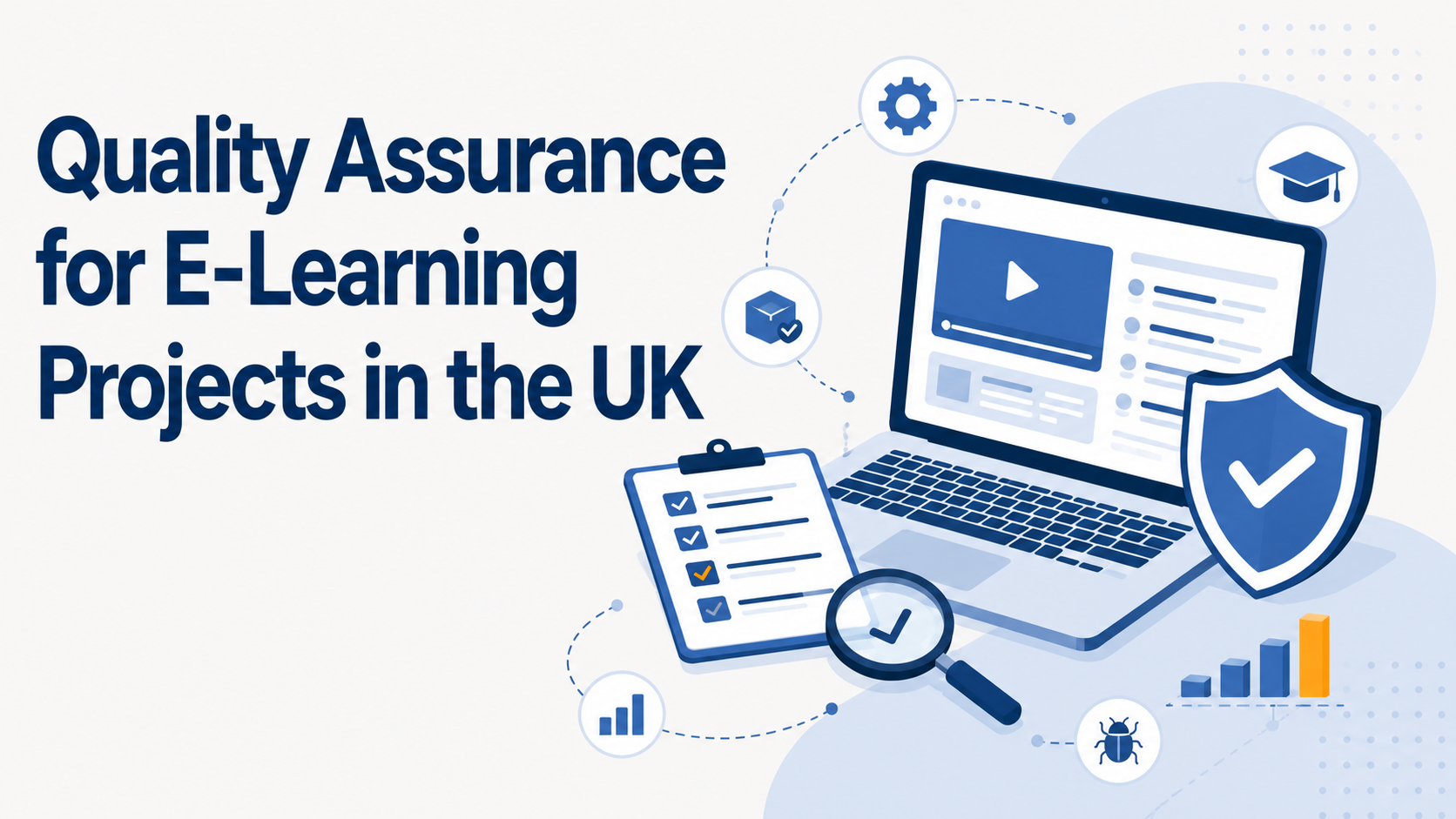
    Rather than relying on memory, reviewers can work through agreed criteria covering functionality, content accuracy, accessibility, branding, learner experience, and technical performance. This creates a more organised review process and makes it easier to compare feedback from different stakeholders.

    Test the Learner Journey

    A technically correct course can still perform poorly if learners struggle to understand what to do next.

    Walk through the programme as though you are seeing it for the first time. Check whether instructions are clear, whether progression feels logical, and whether users can complete activities without unnecessary confusion. Assessments, feedback messages, and navigation should all contribute to a smooth learning experience.

    The objective is not simply to make the course work, but to make it intuitive.

    Involve Independent Reviewers

    People who have worked closely on a project often become familiar with its content and structure. As a result, they can miss issues that are immediately obvious to someone approaching the course with fresh eyes.

    Independent reviewers bring a different perspective. They often identify unclear wording, usability concerns, and gaps in learner guidance that internal project teams may overlook. Including external reviewers at key stages can significantly improve course quality.

    Bring Subject Matter Experts Back into the Process

    Subject matter experts typically contribute during content development, but their role should not end there.

    Before launch, SMEs should review the completed course to confirm that information remains accurate, complete, and relevant. This is particularly important for regulated sectors, technical training, health and safety content, and compliance programmes where incorrect information can create business risk.

    SMEs can also provide valuable feedback on whether key concepts are explained clearly enough for the intended audience.

    Create a Representative Pilot Group

    Before releasing training across an organisation, it is helpful to test it with a smaller group of users.

    A pilot group should include learners from the target audience, line managers, and relevant stakeholders. Their feedback can reveal technical issues, content gaps, and areas where the learning experience could be improved.

    Pilot testing also provides early evidence of whether the course is likely to achieve the intended learning outcomes before wider deployment.

    Establish a Strong Feedback Process

    Finding issues is only useful if there is a reliable way to capture and act on them.

    Reviewers and pilot users should have a simple method for reporting bugs, suggesting improvements, and highlighting concerns. Feedback should be recorded, prioritised, and reviewed regularly by the project team.

    Clear communication helps maintain engagement from testers and ensures that valuable insights are not lost.

    Respond Quickly, but Make Considered Decisions

    When feedback arrives, deal with it promptly. Leaving issues unresolved often creates bottlenecks and increases the workload later in the project.

    That said, not every suggestion should automatically be implemented. Teams should analyse each issue, assess its impact on learning objectives and learner experience, then decide on the most appropriate response. Sometimes the best course of action is to make a different improvement than the one originally suggested.

    Check Compliance and Accessibility Requirements

    For UK organisations, quality assurance should extend beyond content and functionality.

    Courses should be reviewed against accessibility requirements where appropriate, particularly within public sector environments. Accessibility checks may include keyboard navigation, colour contrast, screen reader compatibility, and captioning.

    Where learner data is collected, organisations should also ensure compliance with UK GDPR and the Data Protection Act 2018. Reviewing these requirements during QA can help avoid issues after deployment.

    Measure Against the Intended Outcome

    One useful lesson from highly regulated industries is the concept of assessing whether a product achieves its intended purpose.

    The same principle applies to e-learning. A course may be free from technical faults and visually polished, yet still fail to deliver meaningful results. Quality assurance should therefore include an evaluation of whether the training supports the original learning objectives and contributes to the desired business outcomes.

    For example, if a programme was designed to improve workplace safety, leadership capability, or compliance awareness, testing should consider whether learners are likely to achieve those outcomes, not simply whether the course functions correctly.

    Make Quality Assurance a Core Project Activity

    Successful e-learning projects treat quality assurance as an ongoing discipline rather than a final-stage exercise. Regular testing, structured reviews, learner feedback, and outcome-focused evaluation all contribute to a stronger learning experience. Our guide to the ADDIE model goes into more detail.

    Whether you are developing custom e-learning, deploying training through the Capytech LMS, or creating programmes supported by AI-powered learning tools, a consistent QA process helps ensure learners receive training that is accurate, engaging, and capable of delivering measurable results.

    Frequently asked questions

    What is quality assurance in e-learning?

    Quality assurance in e-learning checks that a course is accurate, works properly and achieves its learning goals before it reaches learners. It covers the content, the design, the technology and the learner experience.

    What should an e-learning QA checklist include?

    Check content accuracy, spelling and grammar, navigation and interactions, audio and video, question logic and feedback, and that completion and scores report correctly in your LMS. Also test on different browsers and devices and check accessibility against WCAG.

    Who should review an e-learning course?

    Use more than one reviewer: subject matter experts for accuracy, a fresh pair of eyes for clarity and errors, and a small group of real learners for the overall experience. The person who built the course is the least likely to spot its problems.

    How do you test that a SCORM course tracks correctly?

    Upload it to the LMS it will run in and complete it as a learner, checking that progress, completion, scores and pass or fail status are recorded. Test resuming part way through too, because bookmarking problems are a common fault.

    See your own training as e-learning, free

    Send us one document and we will turn it into an interactive demo module, so you can judge the quality before you spend anything.
  • Active Learning in UK Workplace Training: Why It Works

    Active Learning in UK Workplace Training: Why It Works

    Most UK employers have experienced the same challenge. Staff complete a training course, pass the assessment, then struggle to apply what they learnt a few weeks later. The training was delivered, but the knowledge did not stick.

    At the same time, employees quickly become confident with systems they use every day, whether that’s a CRM platform, a workplace process, or a customer service procedure. The difference often comes down to participation. People tend to remember far more when they are actively involved in learning rather than simply receiving information.

    Active and Passive Learning Explained

    Passive learning happens when learners absorb information through reading, watching, listening, or observing. Traditional presentations, recorded videos, policy documents, and instructor-led lectures are all common examples. The learner receives information but has limited interaction with it.

    Active learning takes a different approach. Learners participate in the process by solving problems, making decisions, discussing ideas, practising skills, or applying knowledge to realistic situations. Rather than being spectators, they become involved in the learning experience itself.

    Both approaches have a place within workplace learning. There are situations where passive learning is efficient, particularly when introducing information or communicating factual content. However, when organisations want employees to understand, retain, and apply knowledge, active learning often produces stronger results.

    Why Active Learning Improves Knowledge Retention

    One of the biggest advantages of active learning is that it helps people move beyond memorisation. Instead of simply recalling information, learners use it in context.

    When employees apply concepts to realistic situations, they create stronger mental connections. This process helps information remain accessible long after training has ended. It also makes it easier for learners to recognise when and how to use their knowledge in real workplace scenarios.

    For example, reading a customer service guide may explain the principles of handling complaints. Working through a realistic customer scenario requires learners to think, make decisions, and see the consequences of those decisions. That experience is often far more memorable.

    Building Confidence and Better Decision-Making

    Many workplace situations do not follow a script. Managers, team leaders, customer-facing staff, and operational teams regularly encounter challenges that require judgement rather than simple rule-following.

    Active learning helps employees develop these skills. By analysing situations, testing solutions, and reflecting on outcomes, learners strengthen their ability to think critically and adapt when circumstances change.

    This is particularly valuable in areas such as leadership development, health and safety, compliance, customer service, and workplace communication. Employees gain experience applying knowledge rather than simply recalling facts from a training session.

    The Impact on Employee Engagement

    Training programmes are more effective when learners are interested and involved. Passive learning can sometimes feel like an administrative exercise, particularly when employees are expected to work through large amounts of content without interaction.

    Active learning encourages participation. Learners make decisions, solve challenges, answer questions, and receive feedback throughout the process. This keeps attention levels higher and creates a more positive learning experience.

    For organisations investing in digital learning, higher engagement often leads to better completion rates, improved knowledge retention, and greater confidence when applying new skills on the job. Our guide to Malone’s motivation theory goes into more detail.

    How UK Organisations Are Using Active Learning

    Across the UK, organisations are increasingly incorporating active learning techniques into digital training programmes. NHS Trusts, local authorities, private sector employers, and training providers are all looking for ways to make learning more practical and relevant. For a closer look, read our guide to how training companies go digital faster.

    This shift aligns with recommendations from professional bodies such as the CIPD, which consistently highlights the importance of effective workplace learning and ongoing skills development.

    For many employers, the goal is not simply to deliver training. It is to create learning experiences that influence behaviour and improve performance in the workplace.

    Practical Ways to Make E-Learning More Active

    Modern e-learning platforms make it much easier to build active learning experiences at scale, and bespoke e-learning lets you build them around your own workplace situations.

    Scenario-based activities remain one of the most effective methods. Learners are presented with realistic workplace situations and asked to make choices that influence the outcome. This encourages application of knowledge rather than passive observation.

    Interactive assessments can also play an important role. Instead of providing only right-or-wrong answers, effective assessments explain why responses are correct and offer additional guidance when learners make mistakes.

    Interactive video content provides another opportunity to increase participation. Learners can make decisions, answer questions, or explore different pathways throughout the video experience.

    Gamified features, such as achievement badges, progress tracking, and learning challenges, can further encourage participation and help maintain motivation. Our guide to digital badges for e-learning goes into more detail.

    Many organisations also combine digital learning with workplace practice. Giving employees opportunities to apply new skills during their normal working week helps reinforce learning and build confidence.

    Creating an Active Learning Culture

    Improving learning outcomes does not require a complete overhaul of an existing training programme. Small changes can make a significant difference.

    Adding more interaction to online courses, introducing practical exercises, and encouraging discussion and reflection can all increase learner participation. Organisations using platforms such as the Capytech LMS can also track engagement and identify opportunities to strengthen learning experiences over time.

    The most successful training programmes recognise that learning is not something that happens to employees. It is something employees actively participate in. When people are involved in the process, they are more likely to remember what they learnt, apply it effectively, and deliver better results for the organisation.

    Frequently asked questions

    What is active learning?

    Active learning means learners do something with the content, such as answering questions, making decisions, solving problems or discussing ideas, rather than only reading or watching. It is the opposite of passive learning, where information is simply presented.

    Does active learning improve results?

    Yes. A 2014 analysis of 225 studies by Scott Freeman and colleagues found that students taught with traditional lecturing were 1.5 times more likely to fail than those taught with active learning. Workplace learning shows the same pattern: practice and feedback lead to better recall and performance.

    What are examples of active learning in e-learning?

    Scenario questions where learners choose what to do next, drag and drop activities, short case studies, reflection prompts and practice simulations are all active. The key is that each activity asks learners to think or decide rather than simply clicking next.

    What is the difference between active and passive learning?

    In passive learning people receive information, for example by reading a policy or watching a presentation. In active learning they use it straight away, which makes them process it more deeply and remember it for longer.

    See your own training as e-learning, free

    Send us one document and we will turn it into an interactive demo module, so you can judge the quality before you spend anything.
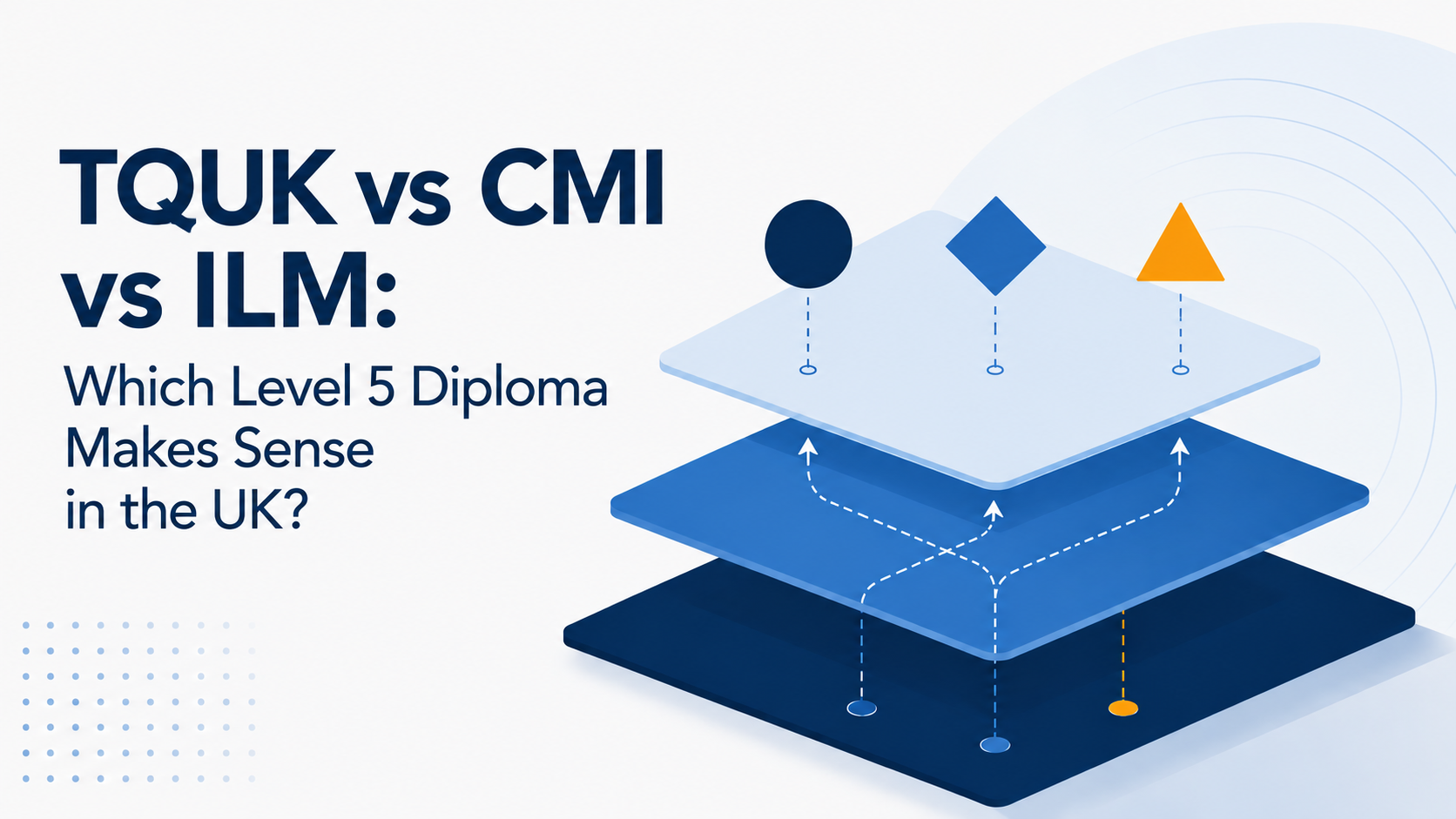
  • TQUK vs CMI vs ILM: Which Level 5 Diploma Makes Sense in the UK?

    TQUK vs CMI vs ILM: Which Level 5 Diploma Makes Sense in the UK?

    For many UK professionals stepping into middle management, a Level 5 leadership qualification is less about collecting certificates and more about career momentum. Whether you work for an NHS Trust in Birmingham, a logistics firm in Manchester, or a growing SME in Leeds, employers increasingly expect managers to combine operational knowledge with people leadership skills.

    That creates a common question. Which awarding body actually carries the most weight, TQUK, CMI, or ILM? The answer is not always as straightforward as marketing pages make it sound. In practice, most employers care less about the logo on the certificate and more about whether the qualification is regulated, recognised, and relevant to the role you want next.

    What Employers Usually Look for in a Level 5 Qualification

    In the UK, regulated qualifications sit within frameworks overseen by organisations such as Ofqual. That matters more than many learners realise.

    A Level 5 diploma is designed to prepare professionals for supervisory and middle management positions. The focus tends to stay consistent across awarding organisations. You will typically cover areas such as operational planning, team leadership, communication, performance management, and decision-making.

    For employers, the practical outcome matters. Can you manage projects? Lead teams effectively? Handle workplace challenges confidently? Those are the questions hiring managers ask during recruitment and promotion reviews.

    Comparing TQUK, ILM and CMI

    CMI and Chartered Status Recognition

    Chartered Management Institute, usually referred to as CMI, is one of the best-known management organisations in the UK. Some learners are drawn to its chartered status and long-standing reputation, particularly within larger corporate environments and public sector organisations.

    CMI qualifications often appeal to professionals who want a traditional management route with strong brand recognition attached.

    ILM and Leadership Development

    Institute of Leadership & Management, part of the City & Guilds Group, has a strong reputation for leadership-focused learning. ILM programmes are commonly chosen by supervisors and team leaders moving into broader management responsibilities.

    In sectors such as education, hospitality, and customer operations, ILM qualifications are widely recognised and respected.

    Where TQUK Fits In

    Training Qualifications UK provides regulated qualifications across several sectors, including management and leadership. Its Level 5 Diploma in Management and Leadership delivers the same overall level of academic recognition expected from an Ofqual-regulated qualification. For a closer look, read our guide to careers after Level 5.

    For many learners, the attraction is practical rather than prestige-driven. TQUK programmes are often more flexible, more accessible online, and easier to complete alongside a full-time Monday to Friday role.

    Is One Qualification Better Than Another?

    In reality, the gap between these qualifications is smaller than many people expect.

    All three awarding bodies offer recognised Level 5 pathways intended for professionals operating at a middle management level. The learning outcomes overlap heavily. You still study leadership approaches, organisational performance, communication, and strategic thinking.

    The main differences usually come down to programme structure, assessment style, and how the course provider delivers support.

    That means your learning experience matters just as much as the awarding body itself.

    Why Delivery Style Matters for UK Professionals

    A qualification can look impressive on paper, but if the course structure does not fit around work and family responsibilities, completion becomes difficult.

    This is where online delivery has become far more important across the UK training market. Hybrid work, shift-based schedules, and rising commuting costs have changed how professionals approach further education.

    Good online Level 5 programmes are designed around that reality. Learners can study fully online, complete coursework at their own pace, and access tutor guidance throughout the programme.

    Instead of attending fixed classroom sessions every week, professionals can fit learning around existing responsibilities. For someone balancing management duties with family commitments, that flexibility often matters more than small differences between awarding organisations.

    The Growing Importance of Flexible Professional Learning

    UK employers are increasingly supporting flexible learning models, particularly in sectors facing management shortages or rapid growth.

    Organisations investing in leadership development now look closely at accessibility, completion rates, and practical application. Programmes that allow learners to study remotely while remaining productive at work are becoming more attractive to both employers and employees.

    This shift also aligns with broader workplace development initiatives linked to organisations such as CIPD and Investors in People, where continuous professional development plays a central role in retention and progression.

    For learners, the best qualification is often the one they can realistically complete and apply immediately in the workplace.

    Choosing the Right Route for Your Career

    If you are comparing TQUK, ILM, and CMI, focus on the outcome you want rather than assuming one badge automatically guarantees better opportunities.

    Ask practical questions instead:

    • Is the qualification Ofqual regulated?
    • Does the delivery model suit your schedule?
    • Will you receive proper tutor support?
    • Can you complete the course alongside full-time work?
    • Does the content reflect real management situations?

    For many UK professionals, a flexible TQUK Level 5 Diploma provides the right balance between recognised accreditation, affordability, and manageable study structure.

    The qualification itself opens doors. Consistent application of the skills is what moves careers forward.

    Frequently asked questions

    What is the difference between CMI and ILM?

    Both are well known UK names for management and leadership qualifications, and both offer regulated qualifications at Level 5. CMI, the Chartered Management Institute, is a chartered professional body, while ILM qualifications are widely used for practical leadership development. At the same level the content is broadly similar.

    Is CMI or ILM better?

    Neither is better for everyone. Employers recognise both, so look at the units on offer, how the course is delivered and assessed, and whether your employer or sector prefers one of them.

    What is TQUK?

    TQUK, Training Qualifications UK, is an awarding organisation regulated by Ofqual. Its Level 5 management qualifications are delivered through approved training centres.

    Do employers care which awarding body a Level 5 diploma comes from?

    Most care more that the qualification is regulated, at the right level and relevant to the role. Some sectors and employers do prefer a particular body, so check job adverts in your field before choosing.

    A short AI course for managers

    AI for Managers is a 20 minute online course on setting expectations, checking AI assisted work and keeping AI use fair in your team. It ends with a short quiz and a certificate of completion.

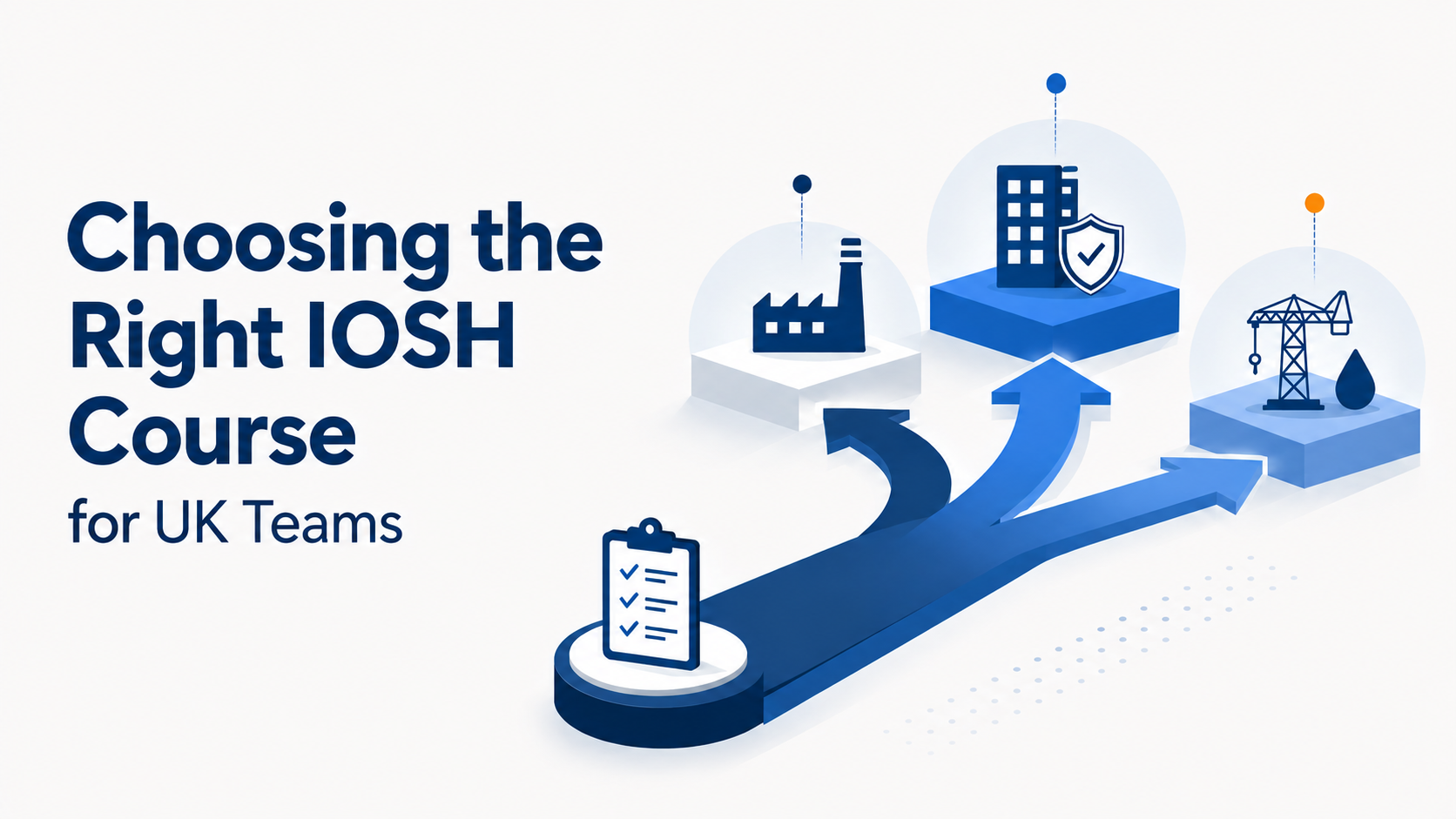
  • Choosing the Right IOSH Course for UK Teams

    Choosing the Right IOSH Course for UK Teams

    Health and safety training often gets treated as a box-ticking exercise until something goes wrong. In many UK organisations, the real challenge is not whether to provide training, but deciding who needs what. A warehouse operative in Birmingham, a facilities supervisor in Manchester, and a board director at an NHS Trust all face different responsibilities. Giving them the same course rarely works.

    That is why IOSH training remains popular across the UK. It gives organisations a clear route for building safety awareness at every level, from frontline staff to senior leadership teams. When training matches day-to-day responsibilities, people are more likely to apply what they have learnt and less likely to see safety as separate from their role.

    Start With the Role, Not the Course

    Many businesses choose training based on job titles alone. A better approach is to look at how people influence workplace safety.

    Employees who carry out practical tasks usually need a solid understanding of hazards, safe behaviour, and personal responsibility. Supervisors and line managers need something different. They are expected to identify risks, monitor standards, and respond when procedures are not followed. Senior leaders need enough knowledge to shape policy, allocate resources, and support a safe working culture across the organisation.

    IOSH structures its courses around those different responsibilities, which makes it easier to build a sensible training plan without unnecessary duplication.

    IOSH Working Safely for Frontline Employees

    For staff members who are new to health and safety training, IOSH Working Safely is often the right starting point. The course focuses on practical awareness rather than management processes.

    This works well for organisations with operational teams, including logistics firms, manufacturers, retail businesses, and local councils. Employees learn how to recognise common workplace hazards and understand their role in reducing accidents and unsafe behaviour.

    Because the course is straightforward and accessible, many employers use it during onboarding or as part of wider compliance training delivered through platforms such as the Capytech LMS.

    Managing Safely for Supervisors and Team Leaders

    Managers carry more responsibility under UK employment law and Health and Safety Executive (HSE) guidance. They are expected to assess risks, investigate incidents, and make sure procedures are followed consistently.

    IOSH Managing Safely is designed for people in that position. Rather than focusing only on personal safety, it covers how to manage safety within a department or team. Participants learn how to carry out risk assessments, monitor performance, and identify areas where standards are slipping.

    This course is particularly useful for growing organisations where experienced technical staff are moving into supervisory roles for the first time. Strong operational knowledge does not always translate into effective safety management, especially in fast-moving sectors such as construction, engineering, and facilities management.

    Why UK Employers Are Reviewing Safety Training

    Across the UK, employers are under increasing pressure to show that training is relevant, recorded properly, and linked to actual workplace risks. The HSE continues to place emphasis on employer accountability, especially in higher-risk environments.

    Many organisations are also trying to reduce disruption caused by traditional classroom delivery. Online IOSH-approved training gives teams more flexibility and makes completion easier to track across multiple sites. For businesses managing hybrid teams or regional operations, centralised reporting can make audits and compliance reviews far less time-consuming.

    Some employers are also linking safety training to wider people strategies supported by CIPD frameworks or Investors in People standards. In practice, that means treating health and safety as part of leadership and workplace culture rather than a standalone compliance task.

    Senior Leaders Need a Different Conversation

    Executive teams rarely need detailed operational instruction, but they still influence workplace safety every day through budgets, priorities, and decision-making.

    IOSH Leading Safely is aimed at directors and senior leaders who need to understand the commercial and legal impact of poor safety standards. The course focuses on leadership accountability and organisational risk rather than frontline procedures.

    For larger UK employers, this can help create stronger alignment between operational teams and leadership expectations. It also demonstrates that safety responsibilities are being taken seriously at every level of the business.

    Building a Smarter Training Matrix

    The most effective organisations avoid a one-size-fits-all approach. Instead, they map training requirements against actual responsibilities.

    A practical training structure might include Working Safely for operational staff, Managing Safely for department supervisors, and Leading Safely for directors or senior managers. That creates clearer accountability and helps avoid gaps where responsibilities sit between teams.

    When combined with digital learning tools and centralised reporting, organisations gain better visibility over completion rates, refresher schedules, and compliance records.

    Capytech supports UK organisations with IOSH Working Safely, delivered 100% online, along with custom e-learning, AI training and the Capytech LMS. We can build other IOSH courses, such as Managing Safely, to your requirements. Our guide to IOSH Working Safely online explains how to roll it out across a team. The aim is simple: make training relevant, manageable, and easier for teams to complete.


    Frequently asked questions

    What IOSH courses are there?

    The best known are Working Safely, for employees at any level, and Managing Safely, for managers and supervisors. IOSH also runs courses for senior leaders and directors, plus specialist and refresher courses.

    What is the difference between IOSH Working Safely and Managing Safely?

    Working Safely is a short introduction for the whole workforce, covering hazards, risks and how to work safely. Managing Safely is a longer course for people who manage teams, covering risk assessment, controlling risks, investigating incidents and measuring performance.

    Which IOSH course do my staff need?

    Start with the role rather than the course. Frontline employees usually need Working Safely, supervisors and team leaders need Managing Safely, and senior leaders benefit from a course focused on their legal duties and leadership of safety culture.

    Is the IOSH course difficult?

    Working Safely is designed for people with no previous safety training and uses plain language and practical examples. Managing Safely is more demanding, with a written assessment and a practical risk assessment project, but it is built for managers rather than safety specialists.

    Add your own site rules to safety training

    IOSH Working Safely covers the general principles. FastTrack turns your own procedures and site rules into a short interactive module in days. Send us one document and we will build a free demo module, so you can judge the quality before you spend anything.
  • Online IOSH Training for UK Teams Without Lost Time

    Online IOSH Training for UK Teams Without Lost Time

    For many UK organisations, mandatory health and safety training creates a familiar problem. Managers need staff certified quickly, but taking teams away from daily operations often affects productivity, customer service, and project deadlines.

    This is especially true in sectors where staffing levels are tightly managed. A facilities company in Birmingham, an NHS Trust department, or a logistics team in Manchester cannot easily pause work for classroom sessions during a busy Monday to Friday schedule. Training still matters, but disruption carries a real cost.

    Capytech’s fully online IOSH-approved training offers a practical alternative. Employees can complete courses at their own pace, from any location, without the need to block out full working days or arrange travel to a training centre.

    Flexible Learning That Fits Around Work

    Traditional classroom training often forces organisations into rigid timetables. Teams lose hours commuting, managers rearrange shifts, and projects slow down while employees attend scheduled sessions.

    Online IOSH training changes that approach completely.

    IOSH Working Safely is available 100% online, so learners can study when it suits them, and other IOSH courses can be built to your requirements. Our guide to IOSH Working Safely online explains what it covers and how to roll it out to a team. Staff can complete modules during quieter periods, between shifts, or from home. That flexibility helps organisations maintain normal operations while still meeting health and safety requirements.

    For employers managing multiple sites across the UK, this also removes the challenge of coordinating face-to-face sessions across different locations.

    A Smarter Option for Growing Organisations

    Many UK businesses now operate with hybrid teams spread across several regions. Delivering consistent training standards across offices in London, Leeds, Glasgow, and Bristol can quickly become difficult when relying on classroom-based learning.

    A fully online model gives L&D leaders far greater control. Training can be rolled out simultaneously across departments, with progress tracked centrally through digital learning systems such as the Capytech LMS.

    This approach is particularly useful for organisations scaling quickly or onboarding new employees regularly. Instead of waiting for scheduled classroom availability, staff can begin training immediately.

    Meeting UK Health and Safety Expectations

    UK employers have a legal duty to provide the health and safety training their people need, under section 2 of the Health and Safety at Work etc. Act 1974, and the Health and Safety Executive publishes guidance on what that means in practice.

    Online IOSH training helps organisations demonstrate a clear commitment to workplace safety while maintaining documented records of employee completion. On successful completion, learners receive official IOSH certification, creating auditable evidence for compliance and internal reporting.

    For HR and compliance teams, digital records also simplify preparation for audits, contractor reviews, and client procurement requirements.

    Reducing Training Costs Without Cutting Quality

    Classroom training expenses often go beyond course fees. Organisations also absorb travel costs, venue hire, overtime cover, and lost productivity.

    Online delivery reduces many of these hidden costs. Businesses can train larger groups without removing employees from operational roles for extended periods. For companies balancing training budgets against wider business pressures, this creates a more cost-effective route to compliance.

    It also supports a more consistent learner experience. Every employee accesses the same materials, assessments, and guidance regardless of location.

    Why UK Employers Are Moving Towards Digital Safety Training

    The shift towards online professional development has accelerated across the UK over recent years. Learning and development teams increasingly expect training to be flexible, measurable, and accessible across different devices.

    Digital safety training supports those expectations while helping organisations maintain operational continuity. Combined with AI-powered learning tools and modern learning platforms, businesses can monitor engagement, completion rates, and learner progress far more effectively than with paper-based systems.

    For employers focused on both compliance and efficiency, online IOSH training offers a practical way to improve workplace safety without interrupting day-to-day operations.

    Capytech delivers IOSH-approved online training designed for modern UK organisations. Teams can complete training flexibly, managers can monitor progress easily, and businesses can maintain productivity while building a stronger safety culture.

    Frequently asked questions

    Can I do IOSH Working Safely online?

    Yes. IOSH Working Safely can be completed fully online, including the final assessment, so nobody needs to attend a classroom. With Capytech it takes about 5 hours of self-paced learning, and successful learners receive an IOSH Working Safely certificate.

    How long does an IOSH Working Safely certificate last?

    IOSH certificates do not expire. IOSH recommends refresher training every three to five years so knowledge keeps up with changes in law and good practice.

    Is IOSH Working Safely worth it for employees?

    For most organisations, yes. It gives staff at every level a shared understanding of hazards, risks and their own responsibilities, and the certificate is widely recognised by UK employers and clients. See IOSH Working Safely online for what the course covers.

    How do you roll out IOSH training to a whole team without losing time?

    Run the course online so people can complete it in shorter sessions around their work, and enrol everyone through one LMS. You can then track progress and certificates in one place, rather than releasing whole teams for a day in a classroom.

    Add your own site rules to safety training

    IOSH Working Safely covers the general principles. FastTrack turns your own procedures and site rules into a short interactive module in days. Send us one document and we will build a free demo module, so you can judge the quality before you spend anything.
  • FastTrack for UK Training Firms: Go Digital Faster

    FastTrack for UK Training Firms: Go Digital Faster

    Why UK Training Providers Are Feeling the Pressure

    Across the UK, many established training providers have built strong reputations through in-person delivery. Whether it is leadership workshops or compliance training for a local council, classroom learning still holds value. But expectations have shifted. Clients now want flexible options that fit around hybrid work and tighter schedules.

    The result is a gap. Organisations that excel face-to-face often struggle to present the same quality online. Building a digital offering from scratch can feel like a separate business altogether, requiring new systems, new skills, and significant investment. For many, that creates hesitation, or worse, rushed solutions that fall short of their brand standards.

    A Practical Route into Digital Learning

    Rather than piecing together platforms and hoping for the best, FastTrack provides a ready-made route into online delivery. Think of it as a complete digital layer added to your existing training business.

    You continue to focus on your subject expertise and client relationships. At the same time, the technical side is handled for you. This includes a branded Capytech LMS, e-commerce capability so you can sell courses directly, and ongoing learner management support.

    The aim is simple. You gain a professional online presence without building an internal tech team from scratch.

    Moving Faster Without Heavy Investment

    One of the biggest barriers for UK providers is cost. Developing an LMS, commissioning e-learning content, and maintaining systems can run into tens of thousands of pounds, often more. For smaller or mid-sized organisations, that level of upfront spend is difficult to justify.

    FastTrack shifts that model. Instead of large initial investment, it works as a partnership that reduces early risk. Your courses can be adapted for online delivery within weeks, not stretched across long development timelines.

    This also changes how you earn. Revenue is no longer tied to room capacity or trainer availability. Once your courses are online, they can generate income consistently, even outside normal working hours.

    Meeting UK Standards and Expectations

    Going digital in the UK comes with its own requirements. Learner data must be handled in line with the UK GDPR and the Data Protection Act 2018. For regulated training, alignment with bodies such as Ofqual or standards recognised by the ESFA can also come into play.

    FastTrack solutions are built with these expectations in mind. Whether you are delivering IOSH-approved safety training or working towards recognised qualifications like a TQUK Level 5 Diploma, your platform needs to support compliance as well as learning outcomes. Our guide to online IOSH training without lost time goes into more detail.

    This is not just about ticking boxes. Clients expect reassurance that their teams are learning in a secure, credible environment. Getting this right strengthens trust and helps win larger contracts.

    Extending Your Reach Beyond Local Clients

    Many UK providers still rely heavily on regional clients. A regional training company might primarily serve nearby businesses, or an NHS Trust partnership within a specific area. Digital delivery changes that dynamic.

    With an online academy in place, your courses are accessible nationwide, and even internationally. A leadership programme designed for UK managers can attract learners from across Europe or further afield.

    This wider reach does not mean losing your identity. In fact, your local expertise becomes part of your appeal. Clients often prefer providers who understand real workplace challenges rather than generic global content.

    Supporting Growth Without Losing Quality

    Scaling a training business usually means hiring more trainers or increasing delivery days. Both options have limits. They also introduce inconsistency if not managed carefully.

    A well-built digital offering allows you to scale in a controlled way. Your content remains consistent, your branding stays intact, and learners receive the same experience regardless of when or where they access the course.

    With ongoing support in place, you are not left managing the system alone. Updates, learner queries, and platform performance are handled alongside you, so your focus remains on improving content and building client relationships.

    A Smarter Way to Expand Your Offering

    The demand for blended learning in the UK is not slowing down. Organisations expect training providers to offer both in-person and digital options as standard. Those who adapt quickly are already seeing the benefits in client retention and new revenue streams.

    FastTrack is not about replacing what you already do well. It is about extending it. By adding a digital capability that matches your existing standards, you can meet modern expectations without overstretching your resources.

    Frequently asked questions

    How can a training company move its courses online?

    Start with the courses you run most often and the material you already have, such as slide decks, workbooks and assessments. Convert them into short interactive modules, put them on a branded learning platform and keep live sessions for practice and discussion.

    Can a training provider sell e-learning under its own brand?

    Yes. A branded LMS lets you run online courses under your own name and logo, enrol your clients’ learners and report on their progress. FastTrack includes a branded LMS alongside the modules we build from your material.

    How does FastTrack work for training companies?

    FastTrack is a fixed monthly subscription with no upfront build cost. We turn your existing documents and slide decks into interactive, SCORM-ready modules in days, not months, and update them within 48 hours whenever your content changes.

    Will moving online replace classroom training?

    Not entirely. Online modules suit knowledge and theory, freeing classroom or live online time for practice, discussion and assessment. Many providers find blended courses fill faster because learners can start the theory straight away.

    See your own training as e-learning, free

    Send us one document and we will turn it into an interactive demo module, so you can judge the quality before you spend anything.