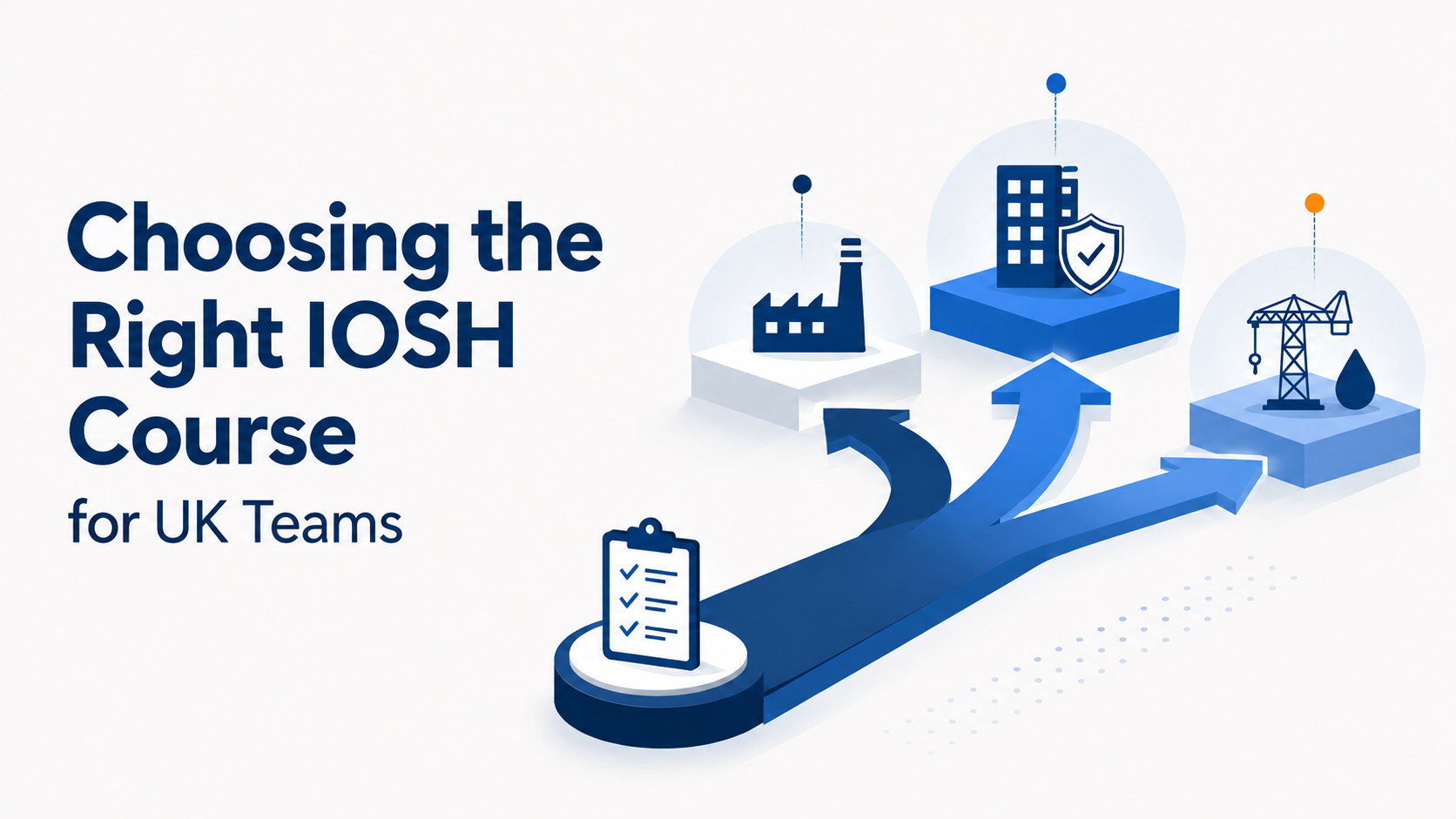

Health and safety training often gets treated as a box-ticking exercise until something goes wrong. In many UK organisations, the real challenge is not whether to provide training, but deciding who needs what. A warehouse operative in Birmingham, a facilities supervisor in Manchester, and a board director at an NHS Trust all face different responsibilities. Giving them the same course rarely works.
That is why IOSH training remains popular across the UK. It gives organisations a clear route for building safety awareness at every level, from frontline staff to senior leadership teams. When training matches day-to-day responsibilities, people are more likely to apply what they have learnt and less likely to see safety as separate from their role.
Start With the Role, Not the Course
Many businesses choose training based on job titles alone. A better approach is to look at how people influence workplace safety.
Employees who carry out practical tasks usually need a solid understanding of hazards, safe behaviour, and personal responsibility. Supervisors and line managers need something different. They are expected to identify risks, monitor standards, and respond when procedures are not followed. Senior leaders need enough knowledge to shape policy, allocate resources, and support a safe working culture across the organisation.
IOSH structures its courses around those different responsibilities, which makes it easier to build a sensible training plan without unnecessary duplication.
IOSH Working Safely for Frontline Employees
For staff members who are new to health and safety training, IOSH Working Safely is often the right starting point. The course focuses on practical awareness rather than management processes.
This works well for organisations with operational teams, including logistics firms, manufacturers, retail businesses, and local councils. Employees learn how to recognise common workplace hazards and understand their role in reducing accidents and unsafe behaviour.
Because the course is straightforward and accessible, many employers use it during onboarding or as part of wider compliance training delivered through platforms such as the Capytech LMS.
Managing Safely for Supervisors and Team Leaders
Managers carry more responsibility under UK employment law and Health and Safety Executive (HSE) guidance. They are expected to assess risks, investigate incidents, and make sure procedures are followed consistently.
IOSH Managing Safely is designed for people in that position. Rather than focusing only on personal safety, it covers how to manage safety within a department or team. Participants learn how to carry out risk assessments, monitor performance, and identify areas where standards are slipping.
This course is particularly useful for growing organisations where experienced technical staff are moving into supervisory roles for the first time. Strong operational knowledge does not always translate into effective safety management, especially in fast-moving sectors such as construction, engineering, and facilities management.
Why UK Employers Are Reviewing Safety Training
Across the UK, employers are under increasing pressure to show that training is relevant, recorded properly, and linked to actual workplace risks. The HSE continues to place emphasis on employer accountability, especially in higher-risk environments.
Many organisations are also trying to reduce disruption caused by traditional classroom delivery. Online IOSH-approved training gives teams more flexibility and makes completion easier to track across multiple sites. For businesses managing hybrid teams or regional operations, centralised reporting can make audits and compliance reviews far less time-consuming.
Some employers are also linking safety training to wider people strategies supported by CIPD frameworks or Investors in People standards. In practice, that means treating health and safety as part of leadership and workplace culture rather than a standalone compliance task.
Senior Leaders Need a Different Conversation
Executive teams rarely need detailed operational instruction, but they still influence workplace safety every day through budgets, priorities, and decision-making.
IOSH Leading Safely is aimed at directors and senior leaders who need to understand the commercial and legal impact of poor safety standards. The course focuses on leadership accountability and organisational risk rather than frontline procedures.
For larger UK employers, this can help create stronger alignment between operational teams and leadership expectations. It also demonstrates that safety responsibilities are being taken seriously at every level of the business.
Building a Smarter Training Matrix
The most effective organisations avoid a one-size-fits-all approach. Instead, they map training requirements against actual responsibilities.
A practical training structure might include Working Safely for operational staff, Managing Safely for department supervisors, and Leading Safely for directors or senior managers. That creates clearer accountability and helps avoid gaps where responsibilities sit between teams.
When combined with digital learning tools and centralised reporting, organisations gain better visibility over completion rates, refresher schedules, and compliance records.
Capytech supports UK organisations with IOSH Working Safely, delivered 100% online, along with custom e-learning, AI training and the Capytech LMS. We can build other IOSH courses, such as Managing Safely, to your requirements. Our guide to IOSH Working Safely online explains how to roll it out across a team. The aim is simple: make training relevant, manageable, and easier for teams to complete.
Ready-to-deploy courses for your team
From IOSH approved health and safety to management and wellbeing, our course library is ready to launch on your LMS.