
Organisations across the UK invest heavily in workplace learning, yet one challenge remains consistent. Not everyone learns in the same way. A training module that works well for one employee may feel less effective for another, even when the content itself is relevant and well designed.
Whether you are creating compliance training for a local authority, onboarding programmes for a growing business, or leadership development for a national employer, the goal is the same. You need learning that reaches a wide audience without creating multiple versions of the same course. Understanding different learning preferences can help achieve that balance.
Why Learning Preferences Matter in Workplace Training
People absorb and process information differently. Some prefer visual explanations, while others are more comfortable reading detailed guidance or learning through practical application.
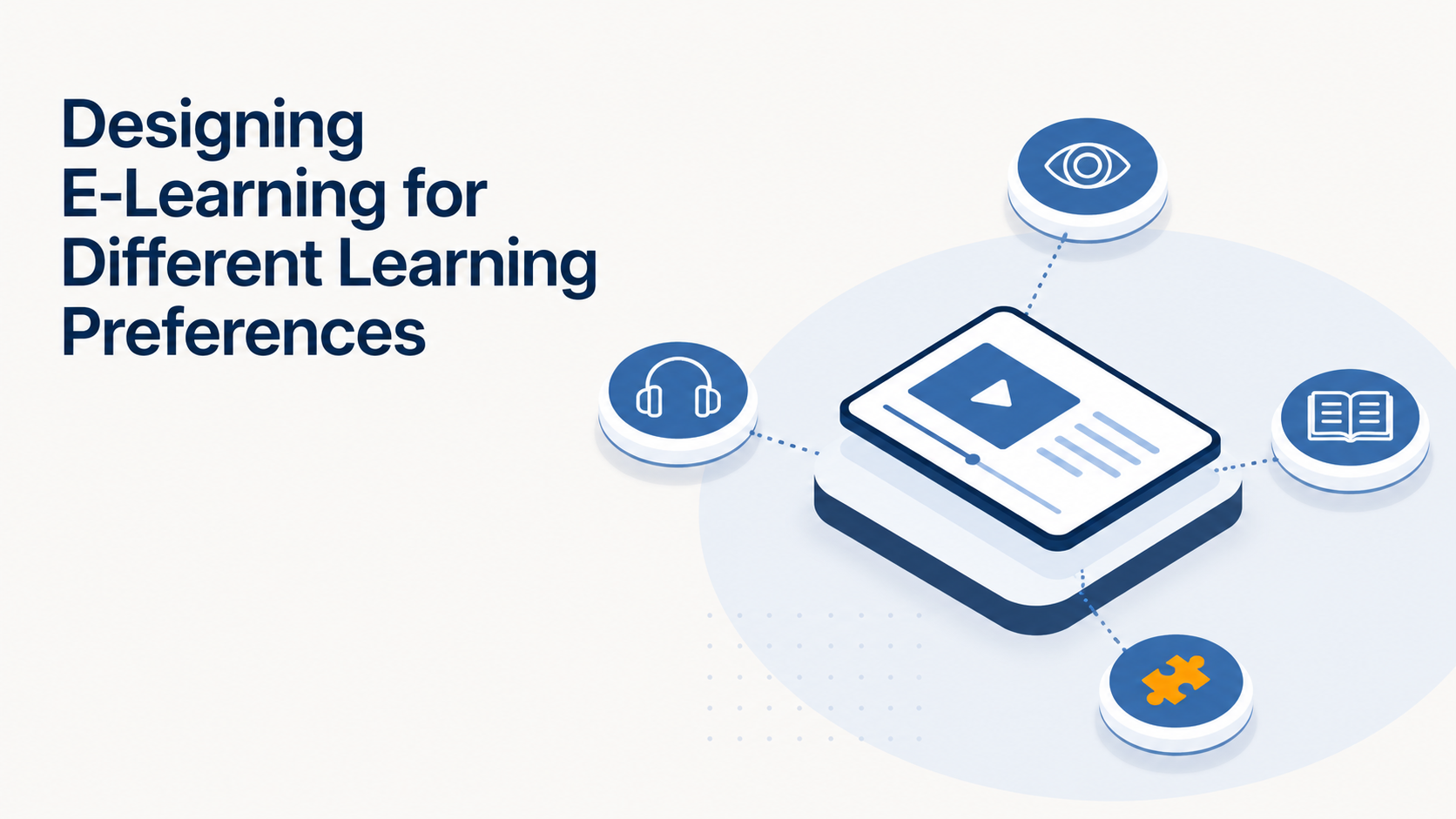
One of the most recognised frameworks for understanding these differences is the VARK model. It groups learning preferences into four broad categories: visual, auditory, read-write, and kinaesthetic.
Although the model is not intended to place learners into rigid categories, it can provide a useful starting point when designing e-learning content that appeals to a broad workforce.
The Four Main Learning Preferences
Visual learners tend to respond well to information presented through images, diagrams, charts, infographics, animations, and video content. They often find it easier to understand concepts when they can see relationships and patterns represented visually.
Read-write learners generally prefer text-based materials. They may engage more effectively with written explanations, guides, policies, reference documents, and note-taking activities.
Auditory learners often benefit from listening and discussion. Narrated content, podcasts, presentations, conversations, and instructor-led sessions can help reinforce learning for this group.
Kinaesthetic learners prefer practical experiences. They learn best when they can apply knowledge, solve problems, practise tasks, and explore realistic situations rather than simply reading or watching content.
Building E-Learning That Appeals to Everyone
The good news for learning designers is that e-learning can accommodate all four learning preferences within a single programme.
Visual learners can benefit from diagrams, illustrations, animations, and short explainer videos. Read-write learners can access supporting text, downloadable resources, and detailed explanations. Auditory learners can engage with narration, interviews, or audio commentary. Kinaesthetic learners can participate in interactive exercises, branching scenarios, simulations, and knowledge checks.
This flexibility is one reason why custom e-learning remains such an effective training format. A well-designed course can combine multiple content types without overwhelming the learner.
Beyond VARK: Individual and Collaborative Learning
The VARK framework does not fully address another important factor in workplace learning. Some people prefer to learn independently, while others gain more value from interaction with colleagues.
Independent learners often appreciate self-paced digital training that allows them to progress in their own time. Social learners may benefit from discussion groups, virtual workshops, coaching sessions, or collaborative activities that complement online learning.
Many UK organisations now use blended learning approaches that combine digital content with workshops, mentoring, or team-based activities. This gives learners greater flexibility while maintaining opportunities for discussion and shared learning.
A UK Workplace Perspective
In UK organisations, training programmes are often expected to satisfy both engagement and compliance requirements. Whether the topic involves health and safety, leadership development, or workplace policies, learners need to understand and retain information well enough to apply it in practice.
For example, an IOSH-approved safety programme may include written guidance, visual demonstrations, narrated explanations, and interactive scenarios. This combination supports a wide range of learning preferences while keeping the focus on practical outcomes.
The same principle applies to management development programmes, including TQUK-accredited Level 5 Diploma pathways. Learners benefit when information is presented in different formats and linked to realistic workplace situations.
Should You Design Separate Courses for Different Learners?
Many training teams initially assume they need separate versions of a course for different learning preferences. In most cases, this is neither practical nor necessary.
People rarely fit neatly into a single category. Someone who prefers visual learning in one context may choose a written guide in another. Learning preferences can also change over time as experience, confidence, and subject matter evolve.
Research and practical experience both suggest that effective learning design matters more than trying to match every learner to a specific category. The focus should remain on presenting information clearly and selecting the most appropriate format for the content itself.
Practical Approaches for Learning Designers
A useful approach is to provide learners with choices wherever possible. For example, a video can be accompanied by a transcript. A written explanation can sit alongside an infographic. Interactive activities can reinforce concepts introduced through text or audio.
That level of flexibility is not always appropriate for every course. However, offering alternative ways to engage with key information can improve accessibility and learner satisfaction.
Most importantly, choose the format that best supports the learning objective. If a hands-on scenario helps learners understand a process, use a scenario. If a concise written explanation communicates the message more effectively, use text. Good learning design should be guided by the content and the desired outcome, not by assumptions about learner categories.
Creating Better Learning Experiences
Understanding learning preferences can help training professionals make more informed design decisions. The VARK model remains a useful framework for considering how people engage with information, but it works best as a guide rather than a rulebook.
The most effective e-learning programmes combine a variety of content types, provide flexibility where appropriate, and focus on helping learners apply knowledge in real-world situations. When training is designed this way, it is more likely to engage diverse audiences and deliver measurable results for UK organisations.
See your own training as e-learning, free
Send us one document and we will turn it into an interactive demo module, so you can judge the quality before you spend anything.