Every organisation wants training that changes how people work, not simply how much information they can remember. Whether you’re introducing new managers, improving customer service, strengthening cyber awareness or supporting health and safety, employees need opportunities to apply what they have learnt in realistic situations.
That is where scenario-based learning makes a real difference. Rather than reading information or watching presentations, learners are placed in situations that reflect everyday workplace challenges. They make decisions, see the consequences of those decisions and build confidence before facing similar situations on the job. For UK employers, this practical approach can improve engagement while supporting stronger business performance.
What Is Scenario-Based Learning?
Scenario-based learning is a type of experiential learning where people develop knowledge and skills by taking part in realistic activities rather than simply absorbing information. Instead of being passive learners, employees become active participants who solve problems, make choices and learn from the outcomes.
Within digital learning, scenarios can recreate workplace situations that employees encounter every day. These experiences encourage learners to think critically, apply existing knowledge and practise new skills in an environment where mistakes become valuable learning opportunities rather than costly business errors.
Because the learning takes place individually, many employees also feel more comfortable experimenting with different decisions than they would during classroom role-play exercises.
Why Organisations Are Choosing Scenario-Based Training
Traditional learning often explains what employees should do. Scenario-based learning asks them to put that knowledge into practice.
By working through realistic situations, learners strengthen both technical knowledge and workplace behaviours. They must analyse information, make decisions and respond to changing circumstances, making the learning experience far more memorable than reading policies or completing simple knowledge checks.
Effective scenario-based learning usually encourages learners to:
- practise skills in realistic but safe environments
- make decisions based on workplace situations
- experience the consequences of different choices
- develop problem-solving and critical thinking abilities
- apply previous learning in meaningful contexts
- strengthen communication, teamwork and professional judgement alongside technical skills
Different Ways to Use Scenario-Based Learning
There is no single format for scenario-based learning. The most suitable approach depends on the skills being developed and the complexity of the subject matter.
Decision-based scenarios present learners with a workplace challenge that requires a series of informed choices. These activities are particularly useful for management, customer service and compliance training.
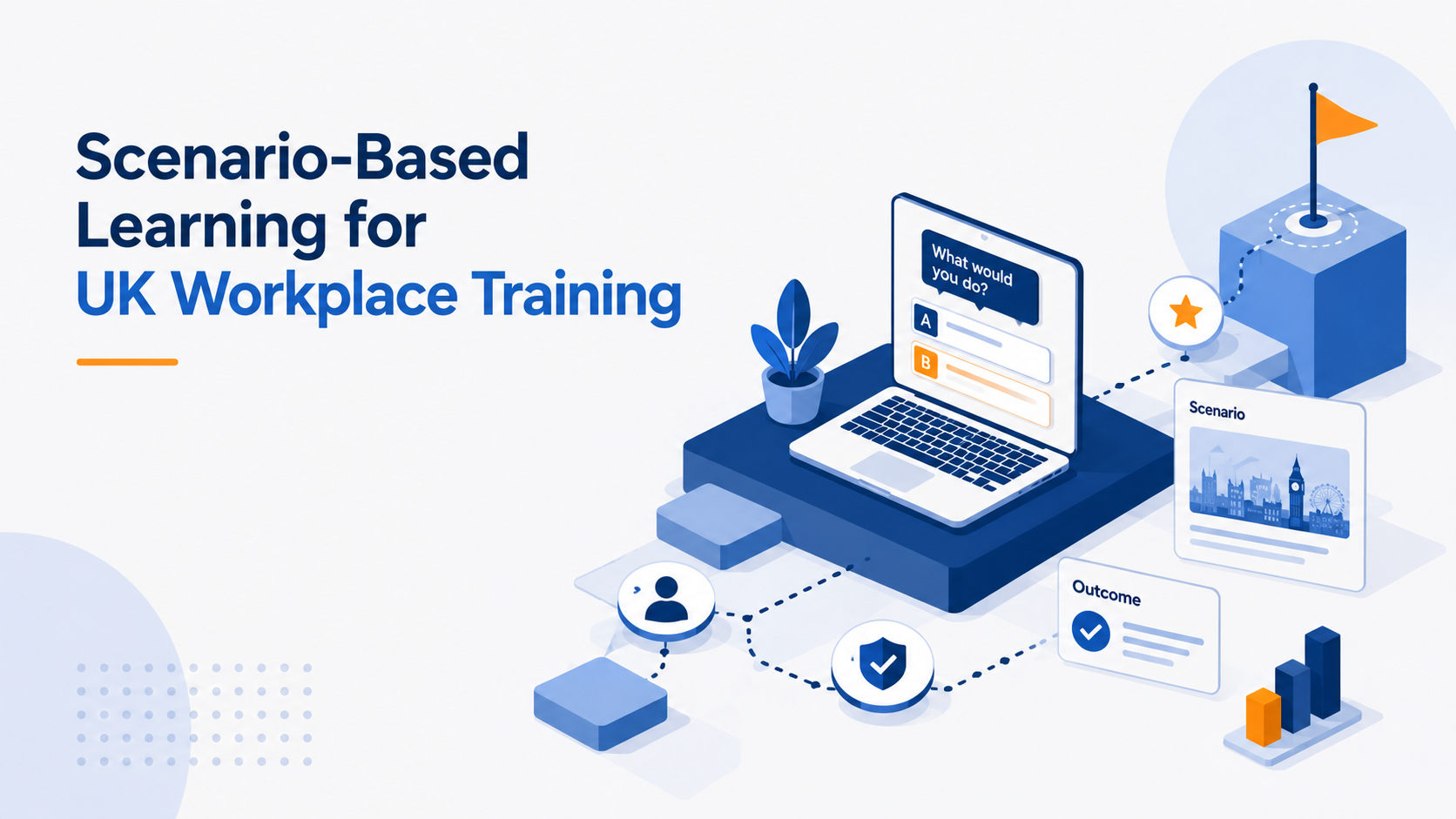
Branching scenarios build on this idea by allowing learners to follow different paths depending on the decisions they make. Each choice creates a different outcome, helping employees understand how small decisions can have wider consequences.
Simulation-based learning allows learners to practise processes using software, equipment or virtual environments. This approach works particularly well for systems training, technical procedures and operational tasks where repeated practice builds confidence.
The technology behind these experiences can range from simple interactive exercises through to immersive virtual or mixed reality environments, depending on training objectives and budget.
Where Scenario-Based Learning Delivers the Greatest Value
Almost any workplace subject can include scenarios, but some training areas benefit more than others.
Cybersecurity awareness becomes more engaging when learners identify phishing attempts or respond to simulated security incidents. Compliance training feels more relevant when employees work through genuine ethical dilemmas rather than memorising regulations.
Customer service teams can practise difficult conversations before speaking with real customers, while sales professionals can improve questioning and objection-handling techniques through realistic interactions.
Scenario-based learning is also highly effective for leadership development, health and safety, critical thinking and roles involving operational or financial risk.
The Building Blocks of an Effective Learning Scenario
Strong scenarios are carefully designed rather than simply adding interaction for its own sake.
Everything starts with a believable workplace situation that learners can recognise. This context helps them understand why the activity matters and encourages greater engagement.
Within that situation, learners are given a challenge to solve or a task to complete. They then make decisions based on the information available, just as they would in the workplace.
Each decision leads to realistic outcomes that demonstrate the impact of their actions. Most importantly, learners receive immediate feedback explaining why particular choices were effective or where improvements could be made. The objective is continuous learning rather than testing alone.
Supporting UK Compliance and Workplace Standards
For many UK organisations, scenario-based learning is particularly valuable when training supports regulatory or legal responsibilities.
Interactive scenarios can help employees understand responsibilities under the UK GDPR and the Data Protection Act 2018, practise safe working procedures that align with Health and Safety Executive (HSE) guidance, or respond appropriately to workplace situations covered by UK employment law.
Because learners experience realistic consequences in a controlled environment, organisations can reinforce good judgement before employees encounter similar situations in their day-to-day roles. This approach can also provide stronger evidence of meaningful learning than relying solely on presentation-based courses.
When Should You Choose Scenario-Based Learning?
Scenario-based learning is most effective when employees need more than theoretical knowledge.
If success depends on making good decisions, applying professional judgement or performing tasks correctly under pressure, realistic practice can significantly improve confidence and competence.
It is especially useful where mistakes in the workplace could affect customer experience, employee safety, information security or regulatory compliance. Allowing learners to make those mistakes during training creates a safer route to developing capability.
Turning Learning into Better Workplace Performance
The best workplace learning helps employees transfer knowledge into everyday practice. Scenario-based learning supports this by giving learners opportunities to think, decide and act in situations that mirror their real responsibilities.
For organisations investing in digital learning, interactive scenarios can increase engagement, improve knowledge retention and shorten the time it takes employees to become fully competent. Combined with Capytech’s custom e-learning development, AI-powered learning tools and the Capytech LMS, scenario-based learning creates training that is practical, measurable and closely aligned with business goals.
See your own training as e-learning, free
Send us one document and we will turn it into an interactive demo module, so you can judge the quality before you spend anything.