Tag: e-learning

  • The ADDIE Model for Instructional Design in UK Workplace Learning

    The ADDIE Model for Instructional Design in UK Workplace Learning

    Many UK organisations are investing more in digital learning, whether they are onboarding new employees, delivering compliance training or supporting professional development. Yet successful e-learning is about much more than attractive content. Without a structured design process, even well-produced courses can fail to improve knowledge or change behaviour.

    That is why instructional design models remain an important part of learning and development. Among the best known is the ADDIE model, a practical framework that helps organisations plan, build, deliver and improve learning programmes. Although it has existed for decades, it continues to support modern e-learning projects across both the public and private sectors.

    Why instructional design still matters

    Instructional design is the process of creating learning experiences that help people gain knowledge and apply it in their day-to-day work. Effective learning does not happen by chance. Every decision, from course structure to assessment methods, should support a clear learning objective.

    Rather than following guesswork, learning teams use instructional design models to organise the development process. ADDIE remains one of the most widely recognised because it provides a logical framework while allowing flexibility throughout a project.

    What does ADDIE stand for?

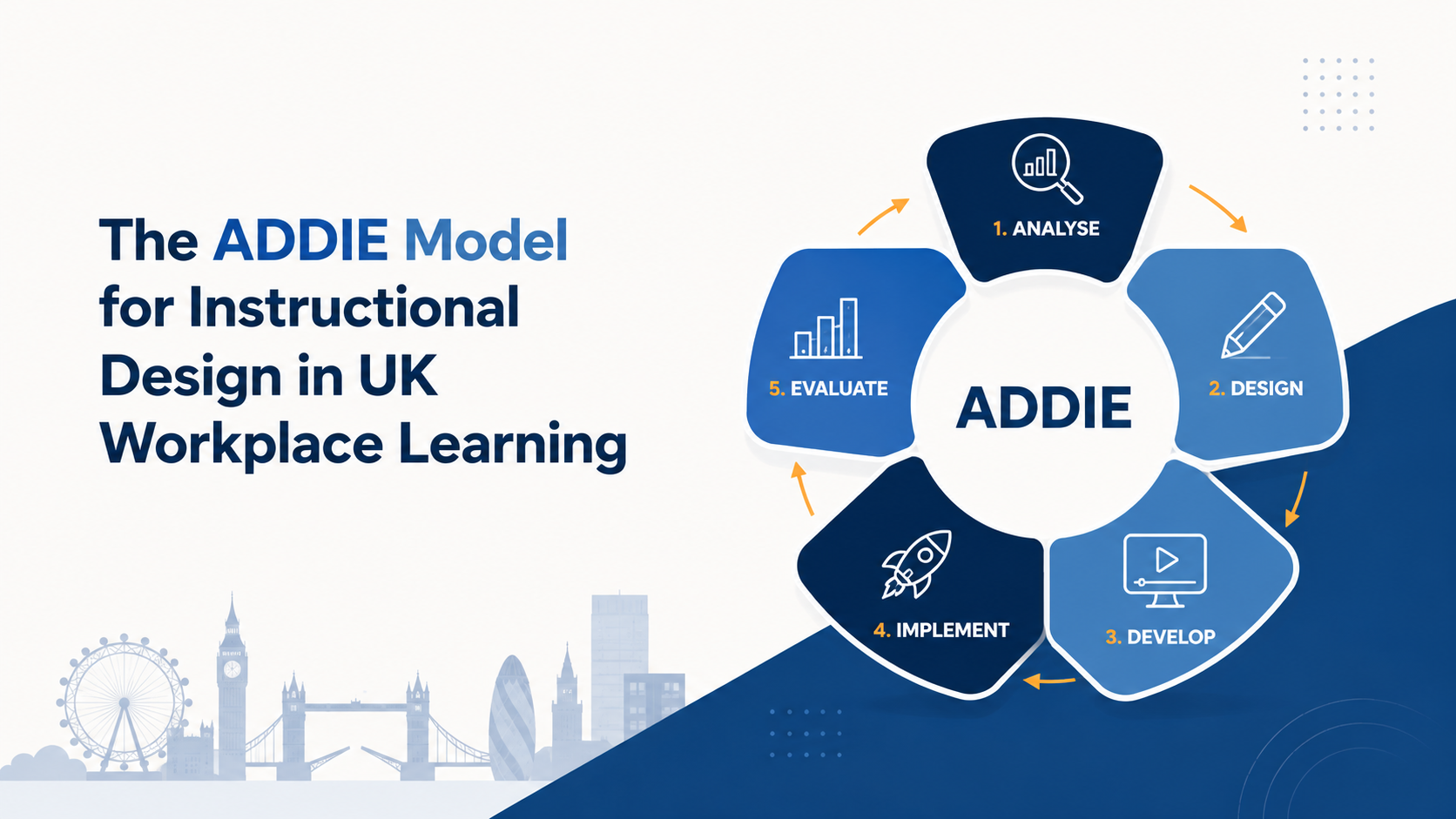
    ADDIE represents five connected stages of instructional design:

    Analyse

    Design

    Develop

    Implement

    Evaluate

    Although these stages are often shown in sequence, they are not intended to be completed only once. Most modern learning projects revisit earlier stages as new information becomes available, making ADDIE compatible with iterative development methods.

    Starting with analysis

    Strong e-learning begins with understanding the problem that needs solving. Before any content is written, organisations should identify the skills gap, define measurable learning objectives and understand what learners already know.

    This stage also involves understanding the audience. Employees in an NHS Trust, for example, will have different learning needs and expectations from staff working in a manufacturing business or local council. Their experience, motivation and working environment should all influence the final course design.

    Analysis should also consider how success will be measured. Whether the aim is improved compliance, better customer service or increased productivity, learning outcomes need to support wider organisational goals.

    Many organisations also assess internal capability during this phase. Deciding which work should be completed in-house and which elements are better delivered by a specialist e-learning partner can save both time and cost.

    Designing an effective learning experience

    Once the objectives are clear, attention turns to designing the learning journey.

    Subject matter experts help ensure technical accuracy, while instructional designers create the overall structure, learner flow and assessment strategy. This is also the stage where decisions are made about learning approaches, such as microlearning, blended learning or scenario-based activities.

    Existing training resources may be suitable for updating rather than replacing entirely. New visual assets, videos, animations or interactive elements can then be produced where required. Wireframes, storyboards and prototypes help gather feedback before full development begins, reducing unnecessary revisions later.

    Bringing the course to life

    The development phase transforms the design into a working e-learning course.

    Content is written, interactive exercises are created and assessments are built into the learner experience. Practical scenarios, knowledge checks and quizzes all help reinforce learning and encourage learners to apply what they have learnt.

    Quality assurance also becomes a priority at this stage. Courses should be tested across different browsers, devices and accessibility settings to ensure learners receive a consistent experience.

    For organisations developing bespoke learning programmes, this is often where AI-powered learning tools can support faster content production while maintaining instructional quality. Platforms such as the Capytech LMS can also simplify course management, learner tracking and reporting once development is complete.

    Rolling out training successfully

    A well-designed course still needs careful implementation.

    Learners need clear communication about why the training matters, how it supports their role and what is expected of them. Managers and senior leaders often play an important role by encouraging participation and reinforcing learning after completion.

    Some organisations begin with a pilot group before launching to the wider workforce. Feedback from early users can identify usability issues or content improvements before a full rollout.

    It is also important to remove barriers that could prevent successful completion, whether those involve technical access, digital confidence or scheduling training around operational demands.

    Measuring success and improving future learning

    Evaluation should not be treated as the final box to tick. Instead, it provides evidence that helps improve both the current course and future learning projects.

    Completion rates and quiz scores offer useful information, but they tell only part of the story. Organisations should also look for changes in workplace behaviour, operational performance and business outcomes. Learner feedback adds valuable context, but measurable improvements against the original objectives provide the strongest indication of success.

    Many organisations continue monitoring performance weeks or months after training to understand whether knowledge has been retained and applied in practice.

    ADDIE in a UK learning and compliance environment

    UK organisations often need to balance learning quality with regulatory responsibilities. During the analysis and design stages, it is sensible to consider how learner information will be collected, stored and reported in line with the UK GDPR and the Data Protection Act 2018.

    For regulated sectors, learning content may also need to align with guidance from bodies such as the HSE, Ofqual or the CIPD, depending on the subject area. Building these requirements into the project from the beginning reduces the need for significant revisions later.

    Where organisations are delivering workplace safety programmes, structured instructional design also supports the development of high-quality IOSH-approved safety training that is both engaging and compliant.

    Is ADDIE still relevant?

    Some people argue that ADDIE belongs to a more traditional approach to learning design because agile development encourages continuous iteration rather than fixed project stages.

    In practice, however, the two approaches work well together. Few learning teams follow ADDIE as a strict linear process. Instead, they revisit earlier stages whenever testing, stakeholder feedback or learner insights suggest improvements.

    The framework simply provides a logical order for making decisions. It ensures learning objectives come before content creation, learner needs are understood before development begins, and evaluation informs future improvements.

    A practical framework that continues to deliver

    The popularity of ADDIE comes from its simplicity rather than rigid rules. It gives organisations a reliable structure for planning learning projects while leaving enough flexibility to adapt throughout development.

    Whether you are creating compliance training, leadership programmes or technical learning, the ADDIE model helps keep learners, business objectives and measurable outcomes at the centre of every decision. Combined with custom e-learning, modern learning platforms and AI-supported development, it remains one of the most effective frameworks for producing learning that delivers lasting results.

    See your own training as e-learning, free

    Send us one document and we will turn it into an interactive demo module, so you can judge the quality before you spend anything.

  • Using Gagné’s Nine Events for Better UK E-Learning Design

    Using Gagné’s Nine Events for Better UK E-Learning Design

    Many UK organisations invest in workplace learning with a clear goal, helping employees perform better in their roles. Yet even well-designed digital training can struggle if learners lose interest, forget key information, or cannot apply what they have learnt once they return to work.

    That is why instructional design frameworks remain so valuable. Rather than focusing only on attractive visuals or technology, they provide a structured way to guide learners from first engagement through to long-term knowledge retention. One of the most widely used frameworks is Robert Gagné’s Nine Events of Instruction, a model that continues to shape effective e-learning design across corporate learning, higher education and professional development in the UK.

    Why Gagné’s instructional model still matters

    Educational psychologist Robert Gagné developed his instructional model around the way adults process and retain information. Instead of treating learning as a single event, he proposed a sequence of instructional activities that help learners build understanding step by step.

    Although the framework was created long before digital learning became common, its principles translate exceptionally well to modern online training. Whether you are creating compliance training, onboarding programmes or leadership development, the model provides a logical structure that supports learner engagement from beginning to end.

    Rather than viewing these as rigid rules, many instructional designers use Gagné’s nine events as a flexible framework that can be adapted to different audiences, industries and learning platforms.

    Building engagement before teaching begins

    The first stage is attracting learners’ attention. If learners begin a course distracted or unconvinced of its value, everything that follows becomes more difficult.

    Attention can be captured long before the course opens. A short introduction from a manager, a realistic workplace problem, or an intriguing question in a launch email can all prepare learners for what is ahead. Once inside the course, storytelling, animation, scenarios or surprising statistics can encourage learners to focus.

    The next step is making expectations clear. Learners should understand not only what they will study, but why it matters to their own role. Explaining the practical benefits creates stronger motivation than simply listing learning objectives. It also helps to explain how progress will be measured throughout the course.

    Connecting new knowledge with existing experience

    Adults rarely begin training with no previous knowledge. One of Gagné’s strengths is recognising that learners understand new ideas more easily when they connect them to experiences they already have.

    This can be achieved through reflective questions, short knowledge checks or realistic workplace examples before introducing new material. Asking learners to think about previous situations encourages them to build on familiar concepts instead of memorising isolated facts.

    Once that foundation has been established, the main learning content can be introduced. Information should be organised into manageable sections rather than presented as long blocks of text. Short learning modules, interactive media and carefully paced explanations help learners absorb information without becoming overloaded.

    Supporting learners as they practise

    Presenting information is only part of effective learning. Learners also need guidance that helps them apply new knowledge correctly.

    Scenario-based learning is particularly useful because it allows people to make decisions in situations that mirror real working environments. Worked examples, practical demonstrations and hints throughout the course all reduce uncertainty while building confidence.

    Learners should then have opportunities to demonstrate what they have understood. Interactive exercises, branching scenarios, simulations and quizzes encourage active participation instead of passive reading. The more learners retrieve and apply information, the more likely they are to remember it later.

    Feedback and assessment should work together

    Immediate feedback is one of the greatest strengths of digital learning. Rather than simply telling learners whether an answer is correct, good feedback explains why an answer is right or wrong and provides additional context where needed.

    As learners progress, formal assessment confirms whether the intended learning outcomes have been achieved. These assessments should reflect real workplace performance rather than testing memory alone. If the aim is to improve decision making or practical skills, assessments should mirror those expectations.

    Combining regular feedback with meaningful assessment gives learners confidence while helping organisations measure the effectiveness of their training programmes.

    Helping learning continue after the course ends

    Completing an e-learning course should not mark the end of the learning process.

    The final stage of Gagné’s model focuses on helping learners retain and apply their knowledge. Refresher resources, searchable learning libraries, follow-up activities and practical workplace tasks all reinforce learning after formal training has finished.

    Modern learning platforms also make it easier for employees to revisit short learning modules whenever they need a reminder. This ongoing access helps reduce knowledge decay and encourages continuous improvement rather than one-off completion.

    Applying Gagné’s model in UK workplace learning

    For UK employers, Gagné’s framework works particularly well alongside modern digital learning strategies. Organisations developing training for sectors such as healthcare, manufacturing, financial services or local government often combine the model with custom e-learning, scenario-based learning and AI-powered learning tools to create more engaging experiences.

    For regulated industries, training also needs to support wider organisational responsibilities. Whether developing health and safety programmes, compliance learning or management development, courses should reflect UK employment law and, where personal information is processed, comply with the UK GDPR and the Data Protection Act 2018.

    Many learning and development teams also use this structured approach when supporting wider professional development initiatives recognised by organisations such as the CIPD or when building evidence for Investors in People accreditation. The framework provides consistency while remaining flexible enough for different learning objectives.

    Bringing the nine events together

    Gagné’s Nine Events of Instruction remain popular because they focus on how people actually learn rather than how technology works.

    The framework encourages designers to gain attention, provide meaningful guidance, create opportunities for practice, deliver useful feedback and reinforce learning long after a course has ended. Combined with thoughtful instructional design and modern digital learning techniques, these principles continue to help UK organisations create training that employees remember and use in their everyday work.

    Whether you are developing onboarding, compliance programmes or specialist workplace training, Gagné’s model offers a practical foundation for creating learning experiences that achieve measurable results.

    See your own training as e-learning, free

    Send us one document and we will turn it into an interactive demo module, so you can judge the quality before you spend anything.

  • How to Choose an E-Learning Developer in the UK

    How to Choose an E-Learning Developer in the UK

    Selecting an e-learning developer is one of the biggest decisions you’ll make when planning a digital learning project. Whether you’re creating compliance training for a manufacturing business in Birmingham, onboarding programmes for a growing technology company in Manchester, or professional development for a public sector organisation, the quality of your chosen partner will directly affect learner engagement and business results.

    Many organisations focus heavily on price when comparing suppliers. A lower quote may look attractive at first, but poorly designed training often leads to low completion rates, extra revisions and expensive redevelopment later. Taking time to assess potential developers properly will help you invest in training that delivers lasting value.

    Start with Learning Expertise, Not Just Technical Skills

    Some agencies offer e-learning alongside web design, marketing or software development. Others specialise in classroom training but only produce digital learning occasionally. Neither approach guarantees effective online learning.

    A dedicated e-learning developer combines technical knowledge with an understanding of how adults learn. They know how to structure information, maintain learner attention and design activities that encourage people to remember and apply what they have learnt.

    Look for Strong Instructional Design

    An attractive course is only part of the picture. Good instructional design ensures every interaction has a purpose.

    Ask how the developer plans learning objectives, assessment methods and learner journeys before production begins. A provider with experienced instructional designers will build content around business outcomes rather than simply transferring existing documents into an online format.

    Review Their Previous Work Carefully

    Experience matters, but so does relevance.

    A developer does not need extensive experience in your industry, although that can be helpful. More important is evidence that they have successfully delivered projects of a similar size and complexity.

    Request examples of completed work and ask about measurable outcomes such as improved completion rates, reduced training time or stronger assessment results.

    Make Sure They Understand UK Organisations

    Learning is more effective when examples, language and scenarios feel familiar to employees.

    A developer working with UK organisations should understand local workplace culture, employment practices and professional expectations. Where compliance training is involved, they should also be familiar with legislation such as the UK GDPR and the Data Protection Act 2018, along with relevant guidance from organisations such as the HSE where appropriate.

    This local knowledge helps create content that feels relevant rather than generic.

    Understand Their Development Process

    Successful e-learning projects follow a structured process from the beginning.

    Ask how the provider moves from initial discussions through discovery, storyboarding, design, development, testing and final delivery. Each stage should have clear approval points so changes are identified early rather than after the course has been built.

    A well-defined process usually results in fewer delays, better communication and a smoother project overall.

    Ask About Project Management

    Large learning projects often involve HR teams, subject matter experts, compliance managers and senior stakeholders.

    Having a dedicated project manager keeps communication organised and helps maintain realistic timelines. You should always know who your main contact is and how progress will be reported throughout the project.

    Check Technical Capability

    Modern digital learning often includes interactive scenarios, branching activities, video, animation, AI-powered learning features and integration with learning management systems.

    Before appointing a supplier, confirm they have the technical capability to deliver everything your project requires, rather than relying heavily on external contractors.

    Confirm They Have Enough Capacity

    Even experienced developers can struggle if they are managing too many projects at once.

    Ask about current workloads, estimated delivery times and the size of the team that will support your project. Adequate resources help maintain quality and reduce the risk of missed deadlines.

    Don’t Overlook Quality Assurance

    Quality assurance should be built into every stage of development rather than left until the end.

    A thorough review process should cover technical testing, accessibility, spelling, functionality, browser compatibility and learner experience before the course is released. Catching issues early saves both time and money.

    Ask About Specialist Services

    Many projects require additional expertise beyond course development.

    For example, you may need professional voiceovers, localisation, translation, animation, video production or specialist copywriting. Even if these services are not provided in-house, your developer should have trusted partners who can deliver them without disrupting the project.

    Check for Transparent Pricing

    A detailed proposal should explain exactly what is included.

    Ask whether costs cover discovery workshops, storyboarding, revisions, testing and post-launch support. Understanding the full scope at the beginning helps avoid unexpected charges later in the project.

    Consider Future Updates

    Many organisations update policies, procedures and regulations every year.

    Ask how easy it will be to revise your courses after launch. A developer who can provide ongoing support and efficient maintenance will help protect your investment over the long term.

    Accessibility Should Be Part of the Conversation

    Accessibility is becoming an increasingly important consideration for UK employers.

    Your provider should understand recognised accessibility principles and discuss how learners with different needs will access the course. This is particularly important for public sector organisations and businesses committed to inclusive learning.

    Choose a Partner, Not Just a Supplier

    The best e-learning projects are collaborative.

    A good developer will ask questions, challenge assumptions where necessary and recommend improvements based on experience. Rather than simply following a specification, they should work with you to produce learning that meets business objectives and delivers a positive experience for employees.

    Making the Right Choice

    Price will always influence purchasing decisions, but it should never be the only factor.

    By assessing providers against experience, instructional design, technical capability, project management, quality assurance and UK expertise, you’ll be far more likely to choose a partner who delivers effective learning that supports your organisation’s goals.

    The right e-learning developer becomes more than a supplier. They become an extension of your learning and development team, helping you create training that employees value and that produces measurable business results.

    See your own training as e-learning, free

    Send us one document and we will turn it into an interactive demo module, so you can judge the quality before you spend anything.
  • Using Malone’s Motivation Theory in UK E-Learning

    Using Malone’s Motivation Theory in UK E-Learning

    Many UK organisations invest heavily in digital learning, yet employees still click through modules with little enthusiasm. Completion rates may look healthy, but genuine engagement is often much harder to achieve. Whether you’re delivering compliance training, onboarding new starters or developing leadership programmes, the challenge is the same. People learn more effectively when they genuinely want to learn.

    One framework that continues to influence instructional design is Malone’s Theory of Intrinsically Motivating Instruction. Although it was first introduced in the early 1980s, its principles remain highly relevant for modern workplace learning. For organisations using custom e-learning, AI-powered learning tools or immersive digital experiences, the theory provides practical guidance for creating learning that people actively enjoy rather than simply complete.

    Why Malone’s Theory Still Matters

    Thomas Malone originally developed his theory after studying what made early video games engaging. His research explored why people willingly invested time solving increasingly difficult challenges simply because the experience itself was enjoyable.

    That thinking translates surprisingly well into workplace learning. Instead of relying on external incentives alone, Malone argued that instruction should motivate learners from within. His framework centres on three connected ideas: curiosity, challenge and fantasy.

    Although technology has changed dramatically since the theory was published, these three principles remain highly effective when designing digital learning.

    Sparking Curiosity Before Delivering Content

    Curiosity is often the first opportunity to capture a learner’s attention. If people immediately understand every answer, there is little reason to stay engaged. Good learning design creates questions before it provides solutions.

    Malone divides curiosity into sensory and cognitive elements. Sensory curiosity comes from presenting information in visually interesting ways, while cognitive curiosity encourages learners to think, predict and solve problems.

    In e-learning, this might include interactive scenarios, branching decisions, short video sequences, realistic simulations or puzzles that encourage learners to investigate rather than simply read.

    AI-powered learning tools can also adapt questions based on learner performance, helping maintain interest without making activities repetitive. Rather than presenting information as a static presentation, the learner becomes an active participant throughout the course.

    Creating the Right Level of Challenge

    Challenge is another essential ingredient of intrinsic motivation. Learning should never feel impossible, but it should require genuine effort.

    Malone describes three important aspects of challenge. Learners need achievable goals, they need to understand exactly what success looks like, and they need regular feedback throughout the experience.

    These principles fit naturally into self-paced digital learning. A well-designed module gradually increases complexity as confidence grows. Early activities introduce core concepts before moving towards more realistic workplace situations.

    Learning objectives should be introduced clearly at the beginning of each module and revisited during the course. This helps learners recognise their own progress and understand why each activity matters.

    Feedback is equally important. Modern e-learning allows organisations to provide immediate responses to quizzes, practical exercises and decision-making scenarios. AI can also identify common mistakes across large learner groups, helping Learning and Development teams improve future training while giving individuals personalised guidance.

    Making Learning Feel Real

    The word “fantasy” can sound unusual in a business setting, but Malone was not suggesting every course should resemble a computer game.

    Instead, fantasy refers to creating meaningful situations where learners can apply knowledge in realistic contexts. When people can imagine themselves using a skill at work, motivation naturally increases.

    For example, a cybersecurity course might place learners in the role of an employee responding to a suspected phishing attack. A management programme could ask learners to handle difficult conversations with team members. Health and safety training may require participants to identify hazards before an incident occurs.

    These scenarios help learners connect theory with practice. Rather than memorising information for an assessment, they begin thinking about how they would respond in their own workplace.

    Custom e-learning makes this particularly effective because scenarios can reflect an organisation’s actual procedures, terminology and working environment.

    Applying the Theory Across UK Organisations

    Many UK employers are already moving towards learning experiences that reflect Malone’s principles, even if they do not explicitly reference the theory.

    An NHS Trust may use realistic patient scenarios during clinical training. A local authority might develop interactive safeguarding exercises instead of relying solely on policy documents. Financial services organisations increasingly use branching simulations to help staff practise regulatory decisions before encountering them with customers.

    These approaches encourage employees to think, make decisions and experience realistic consequences within a safe learning environment.

    For organisations investing in digital learning, the objective should be more than simply meeting compliance requirements. Learning should build confidence and encourage better workplace behaviour long after the course has been completed.

    Supporting UK Learning Standards

    For UK employers, learner engagement is only one part of effective training. Digital learning should also support wider organisational objectives and meet relevant standards where appropriate.

    Learning programmes may contribute towards professional development recognised by bodies such as the CIPD, support health and safety responsibilities under HSE guidance, or reinforce internal policies aligned with UK GDPR and the Data Protection Act 2018.

    Motivating learning experiences are therefore not simply about increasing completion rates. They also help employees retain knowledge, apply it consistently and demonstrate competence in real working situations.

    Bringing Malone’s Ideas into Modern E-Learning

    Today’s learning technologies provide far more opportunities than were available when Malone first published his research.

    Interactive branching scenarios, AI tutors, adaptive assessments, immersive simulations and collaborative learning environments all support the principles of curiosity, challenge and meaningful application.

    The technology itself is not the objective. The goal is designing learning that encourages people to think, explore and solve problems.

    When organisations combine thoughtful instructional design with modern digital learning tools, employees become active participants rather than passive observers. That is where lasting learning begins.

    At Capytech, we apply these instructional design principles when developing custom e-learning, AI-powered learning experiences and the Capytech LMS solutions for UK organisations. By focusing on learner motivation alongside business objectives, organisations can create training that delivers measurable improvements in engagement, knowledge retention and workplace performance.

    See your own training as e-learning, free

    Send us one document and we will turn it into an interactive demo module, so you can judge the quality before you spend anything.
  • Quadrant 2 Thinking for Better Business Planning in the UK

    Quadrant 2 Thinking for Better Business Planning in the UK

    Running a business often feels like an endless cycle of meetings, emails and deadlines. By Friday afternoon, it’s easy to realise you’ve spent the entire week responding to immediate demands without making meaningful progress on your longer-term goals.

    For many UK organisations, especially those investing in digital learning and workforce development, success depends on creating time for strategic thinking. Stepping away from day-to-day pressures allows leaders to make better decisions about growth, innovation and where their organisation should be heading over the coming years.

    Why urgent work always wins

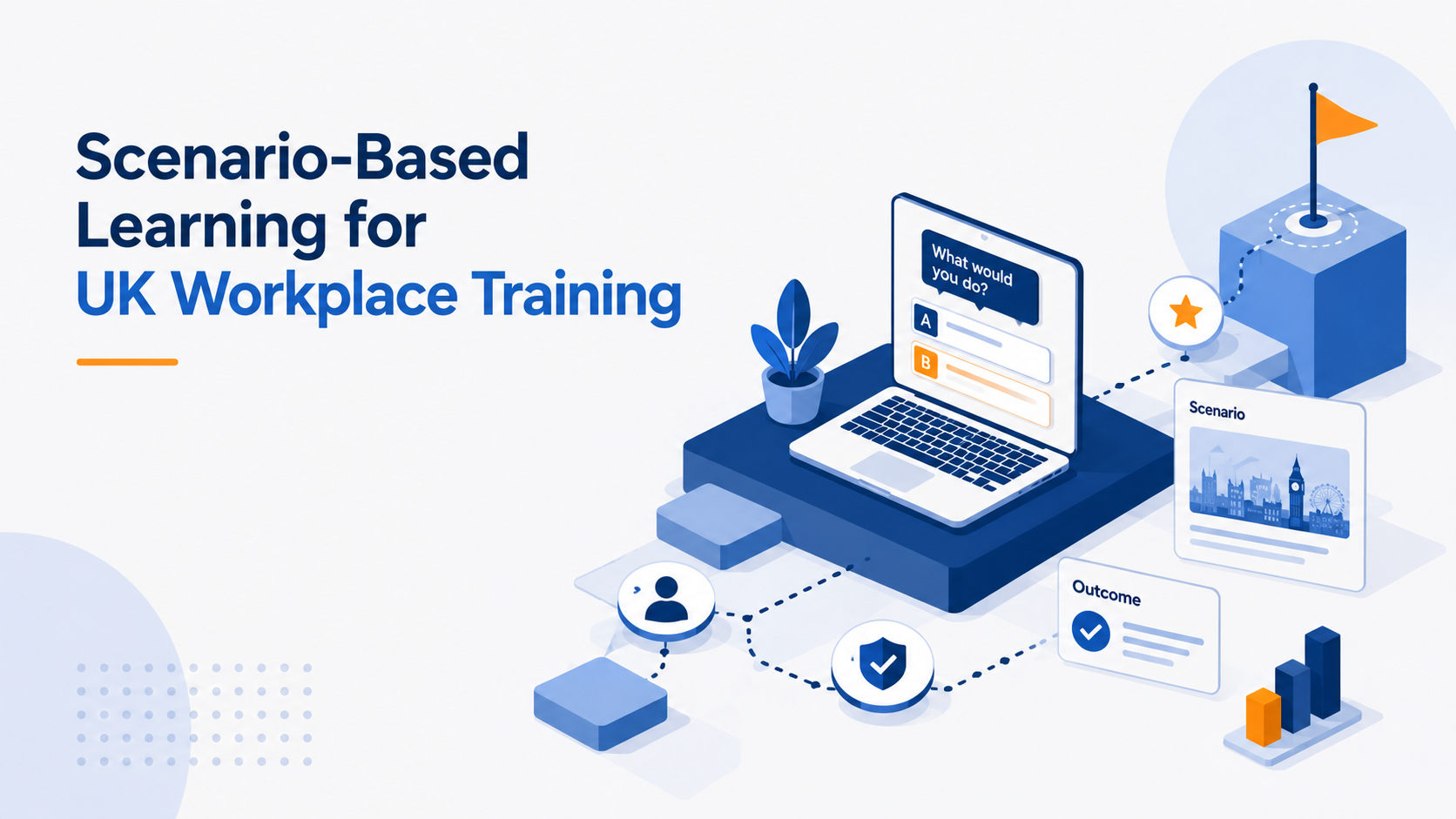
    The well-known Eisenhower Matrix divides work into four categories based on urgency and importance. Most people naturally spend their time dealing with urgent and important tasks, while also responding to interruptions that feel urgent but contribute little to long-term success.

    There is nothing wrong with handling pressing issues. Sales opportunities, client proposals and operational decisions all matter. The challenge comes when every day becomes reactive. If your calendar is permanently full of immediate priorities, strategic planning rarely gets the attention it deserves.

    The value of Quadrant 2 thinking

    Quadrant 2 focuses on work that is important but not yet urgent. This is where organisations plan for future growth, improve processes and invest in capability rather than simply maintaining current performance.

    For businesses delivering workplace learning, this might involve developing a long-term digital learning strategy, reviewing learner engagement, investing in AI-powered learning tools or planning new custom e-learning programmes. These activities may not require immediate action, but they often produce the greatest impact over time.

    Making space for this type of thinking provides greater clarity. Instead of reacting to the next problem, you begin making deliberate decisions that shape the direction of the business.

    Strategic planning creates better outcomes

    Many business leaders recognise the feeling of spending weeks focused on proposals, customer enquiries and operational issues. While these activities generate revenue and keep projects moving, they can leave little time to consider where the organisation should be in one, three or even five years.

    Setting aside dedicated time for strategic planning changes that perspective. It becomes easier to identify the services that deliver the greatest value, understand which markets offer the strongest opportunities and decide where future investment should be directed.

    For Capytech, that means continuing to help UK organisations improve workplace learning through custom e-learning, the Capytech LMS, FastTrack, AI-powered learning solutions and IOSH-approved safety training.

    A UK perspective on long-term planning

    UK employers are placing increasing emphasis on workforce capability, compliance and continuous professional development. Guidance from organisations such as the CIPD encourages employers to think beyond immediate performance and build learning cultures that support sustainable growth.

    Whether you’re working with a local authority, an NHS Trust, a manufacturer or a professional services firm, the principle remains the same. Organisations that regularly invest time in planning are often better prepared for change than those that only react when problems arise.

    Building learning strategies, reviewing skills gaps and planning future training initiatives are all examples of Quadrant 2 activities that strengthen organisations over time.

    Make time before it becomes urgent

    Strategic thinking rarely appears on your to-do list because it doesn’t usually demand immediate attention. That is exactly why it deserves a place in your schedule.

    Blocking out regular time each month to review business goals, learning priorities and future opportunities can prevent reactive working from becoming the norm. Over time, those small investments in planning can have a significant influence on growth, employee development and organisational resilience.

    Quadrant 2 thinking is not about ignoring today’s priorities. It’s about ensuring tomorrow’s opportunities receive the attention they deserve before they become tomorrow’s problems.

    See your own training as e-learning, free

    Send us one document and we will turn it into an interactive demo module, so you can judge the quality before you spend anything.
  • Scenario-Based Learning for UK Workplace Training

    Scenario-Based Learning for UK Workplace Training

    Every organisation wants training that changes how people work, not simply how much information they can remember. Whether you’re introducing new managers, improving customer service, strengthening cyber awareness or supporting health and safety, employees need opportunities to apply what they have learnt in realistic situations.

    That is where scenario-based learning makes a real difference. Rather than reading information or watching presentations, learners are placed in situations that reflect everyday workplace challenges. They make decisions, see the consequences of those decisions and build confidence before facing similar situations on the job. For UK employers, this practical approach can improve engagement while supporting stronger business performance.

    What Is Scenario-Based Learning?

    Scenario-based learning is a type of experiential learning where people develop knowledge and skills by taking part in realistic activities rather than simply absorbing information. Instead of being passive learners, employees become active participants who solve problems, make choices and learn from the outcomes.

    Within digital learning, scenarios can recreate workplace situations that employees encounter every day. These experiences encourage learners to think critically, apply existing knowledge and practise new skills in an environment where mistakes become valuable learning opportunities rather than costly business errors.

    Because the learning takes place individually, many employees also feel more comfortable experimenting with different decisions than they would during classroom role-play exercises.

    Why Organisations Are Choosing Scenario-Based Training

    Traditional learning often explains what employees should do. Scenario-based learning asks them to put that knowledge into practice.

    By working through realistic situations, learners strengthen both technical knowledge and workplace behaviours. They must analyse information, make decisions and respond to changing circumstances, making the learning experience far more memorable than reading policies or completing simple knowledge checks.

    Effective scenario-based learning usually encourages learners to:

    • practise skills in realistic but safe environments
    • make decisions based on workplace situations
    • experience the consequences of different choices
    • develop problem-solving and critical thinking abilities
    • apply previous learning in meaningful contexts
    • strengthen communication, teamwork and professional judgement alongside technical skills

    Different Ways to Use Scenario-Based Learning

    There is no single format for scenario-based learning. The most suitable approach depends on the skills being developed and the complexity of the subject matter.

    Decision-based scenarios present learners with a workplace challenge that requires a series of informed choices. These activities are particularly useful for management, customer service and compliance training.

    Branching scenarios build on this idea by allowing learners to follow different paths depending on the decisions they make. Each choice creates a different outcome, helping employees understand how small decisions can have wider consequences.

    Simulation-based learning allows learners to practise processes using software, equipment or virtual environments. This approach works particularly well for systems training, technical procedures and operational tasks where repeated practice builds confidence.

    The technology behind these experiences can range from simple interactive exercises through to immersive virtual or mixed reality environments, depending on training objectives and budget.

    Where Scenario-Based Learning Delivers the Greatest Value

    Almost any workplace subject can include scenarios, but some training areas benefit more than others.

    Cybersecurity awareness becomes more engaging when learners identify phishing attempts or respond to simulated security incidents. Compliance training feels more relevant when employees work through genuine ethical dilemmas rather than memorising regulations.

    Customer service teams can practise difficult conversations before speaking with real customers, while sales professionals can improve questioning and objection-handling techniques through realistic interactions.

    Scenario-based learning is also highly effective for leadership development, health and safety, critical thinking and roles involving operational or financial risk.

    The Building Blocks of an Effective Learning Scenario

    Strong scenarios are carefully designed rather than simply adding interaction for its own sake.

    Everything starts with a believable workplace situation that learners can recognise. This context helps them understand why the activity matters and encourages greater engagement.

    Within that situation, learners are given a challenge to solve or a task to complete. They then make decisions based on the information available, just as they would in the workplace.

    Each decision leads to realistic outcomes that demonstrate the impact of their actions. Most importantly, learners receive immediate feedback explaining why particular choices were effective or where improvements could be made. The objective is continuous learning rather than testing alone.

    Supporting UK Compliance and Workplace Standards

    For many UK organisations, scenario-based learning is particularly valuable when training supports regulatory or legal responsibilities.

    Interactive scenarios can help employees understand responsibilities under the UK GDPR and the Data Protection Act 2018, practise safe working procedures that align with Health and Safety Executive (HSE) guidance, or respond appropriately to workplace situations covered by UK employment law.

    Because learners experience realistic consequences in a controlled environment, organisations can reinforce good judgement before employees encounter similar situations in their day-to-day roles. This approach can also provide stronger evidence of meaningful learning than relying solely on presentation-based courses.

    When Should You Choose Scenario-Based Learning?

    Scenario-based learning is most effective when employees need more than theoretical knowledge.

    If success depends on making good decisions, applying professional judgement or performing tasks correctly under pressure, realistic practice can significantly improve confidence and competence.

    It is especially useful where mistakes in the workplace could affect customer experience, employee safety, information security or regulatory compliance. Allowing learners to make those mistakes during training creates a safer route to developing capability.

    Turning Learning into Better Workplace Performance

    The best workplace learning helps employees transfer knowledge into everyday practice. Scenario-based learning supports this by giving learners opportunities to think, decide and act in situations that mirror their real responsibilities.

    For organisations investing in digital learning, interactive scenarios can increase engagement, improve knowledge retention and shorten the time it takes employees to become fully competent. Combined with Capytech’s custom e-learning development, AI-powered learning tools and the Capytech LMS, scenario-based learning creates training that is practical, measurable and closely aligned with business goals.

    See your own training as e-learning, free

    Send us one document and we will turn it into an interactive demo module, so you can judge the quality before you spend anything.
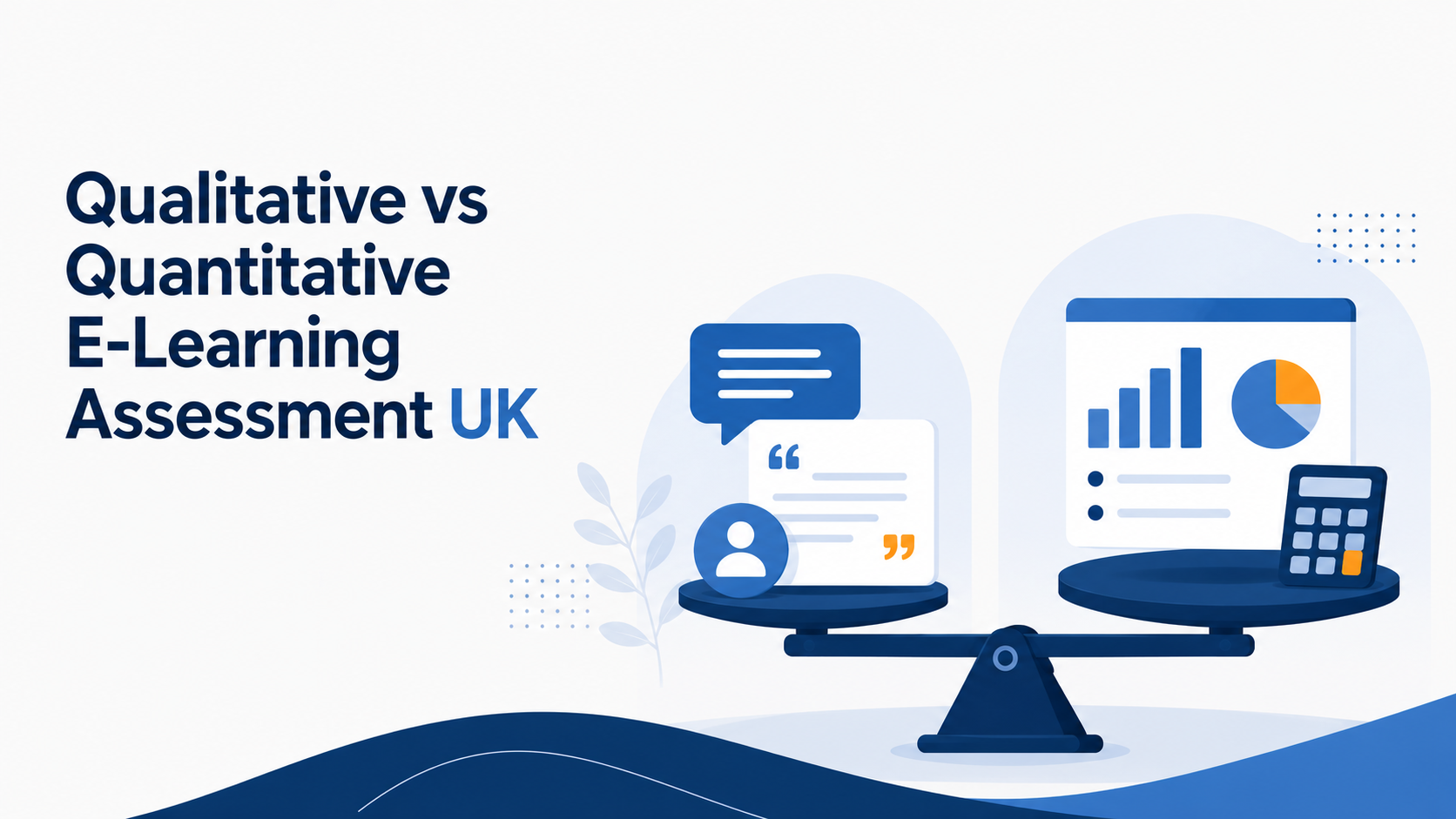
  • Qualitative vs Quantitative E-Learning Assessment UK Organisations 

    Qualitative vs Quantitative E-Learning Assessment UK Organisations 

    Measuring whether workplace learning has made a real difference is about more than checking whether employees passed a quiz. UK organisations are increasingly expected to demonstrate that training leads to better performance, improved compliance, and lasting behaviour change. That means looking beyond test scores alone.

    Whether you are delivering compliance training, onboarding, leadership development or health and safety programmes, choosing the right assessment methods makes a significant difference. The strongest learning strategies combine numerical evidence with practical observations, giving employers a clearer picture of what learners know and how effectively they apply it at work.

    Understanding the Two Main Types of Assessment

    E-learning assessments generally fall into two broad categories: quantitative and qualitative.

    Quantitative assessments measure performance using numbers or measurable outcomes. They answer questions such as how many learners passed a course, what average score was achieved, or whether a business target improved after training.

    Qualitative assessments take a different approach. Rather than assigning a score, they explore how learners think, make decisions and apply their knowledge in realistic situations. This provides context that numbers alone cannot always capture.

    Most organisations benefit from using both approaches together rather than treating them as alternatives.

    When Quantitative Assessments Work Best

    Quantitative assessment is familiar to most learners because it forms the basis of many online courses. Multiple choice quizzes, knowledge checks and final tests all produce measurable results that are easy to record and compare.

    Other quantitative measures can include course completion rates, learner satisfaction ratings, customer service metrics, sales performance or reductions in workplace incidents after training has been introduced.

    The main advantages are straightforward. Results are consistent, objective and simple to analyse across large groups. They also make it easier to compare departments, locations or different training programmes over time. Because the data is measurable, organisations can identify trends and demonstrate progress against learning objectives.

    Why Qualitative Assessment Adds More Context

    Passing a test does not always mean someone can perform confidently in a real workplace situation. This is where qualitative assessment becomes valuable.

    Scenario-based activities, workplace observations, project work and manager feedback all help assess how learners apply their knowledge. Instead of asking for one correct answer, these methods explore judgement, decision-making and problem-solving.

    For example, a customer service adviser may achieve full marks in an online assessment but still struggle when handling a difficult customer. Observing real interactions or reviewing recorded calls provides a richer understanding of their capability than a percentage score alone.

    Qualitative assessment also encourages meaningful feedback from learners, helping organisations understand how training supports day-to-day work rather than simply whether participants enjoyed the course.

    Combining Both Approaches Produces Better Results

    The most effective learning programmes rarely rely on a single assessment method.

    A compliance course might finish with an online quiz to confirm learners understand legal responsibilities. Several weeks later, managers could observe workplace behaviour to see whether those responsibilities are being followed consistently. Together, these assessments measure both knowledge and practical application.

    The same principle applies across leadership development, digital skills, sales training and health and safety programmes. Quantitative data shows whether learning has been completed successfully, while qualitative evidence demonstrates whether it has made a difference.

    Using both methods also helps learning teams identify where further coaching or support may be needed.

    A Familiar UK Example

    Learning to drive provides an easy way to understand why both assessment styles matter.

    Before receiving a driving licence, learners must pass the theory test. This measures their knowledge of road signs, traffic rules and safe driving practices using a numerical score. It is an essential part of the process.

    However, passing the theory test alone does not prove someone can drive safely. The practical driving test assesses observation, judgement, awareness and decision-making in real traffic conditions. An examiner evaluates performance throughout the journey rather than relying solely on right or wrong answers.

    Corporate learning follows much the same pattern. Employees often need to demonstrate both knowledge and competence before training objectives can truly be considered achieved.

    Meeting UK Learning and Compliance Expectations

    Many UK organisations operate in sectors where demonstrating competence is just as important as recording course completion. Employers delivering health and safety training, regulated industry programmes or mandatory compliance learning often need evidence that staff can apply what they have learnt in practice.

    Frameworks supported by organisations such as the CIPD and guidance from the HSE encourage employers to evaluate whether learning has changed workplace behaviour, not simply whether training has been completed. For learning teams, this makes a balanced assessment strategy increasingly valuable.

    Modern learning platforms can support this by combining quizzes with manager reviews, workplace observations, learner reflections and performance data, allowing organisations to build a more complete picture of learning effectiveness.

    Building Better E-Learning Assessments

    When designing an e-learning programme, assessment should be planned alongside the learning experience rather than added at the end.

    A well-designed course may include knowledge checks throughout the content, a scored assessment on completion, realistic scenarios that test judgement, learner feedback and follow-up reviews with line managers. Business metrics can then be analysed over time to measure whether the training has delivered the intended outcomes.

    Platforms such as Capytech LMS also make it easier to gather multiple forms of assessment in one place, helping organisations monitor learner progress while supporting continuous improvement.

    Final Thoughts

    There is no single assessment method that answers every question about learning success.

    Quantitative assessments provide clear, measurable evidence that learners have understood key concepts. Qualitative assessments reveal whether that knowledge has influenced behaviour and performance in the workplace.

    By combining both approaches, UK organisations gain a more accurate understanding of training effectiveness, allowing them to improve learning programmes and demonstrate greater value from their investment in workplace development.

    See your own training as e-learning, free

    Send us one document and we will turn it into an interactive demo module, so you can judge the quality before you spend anything.
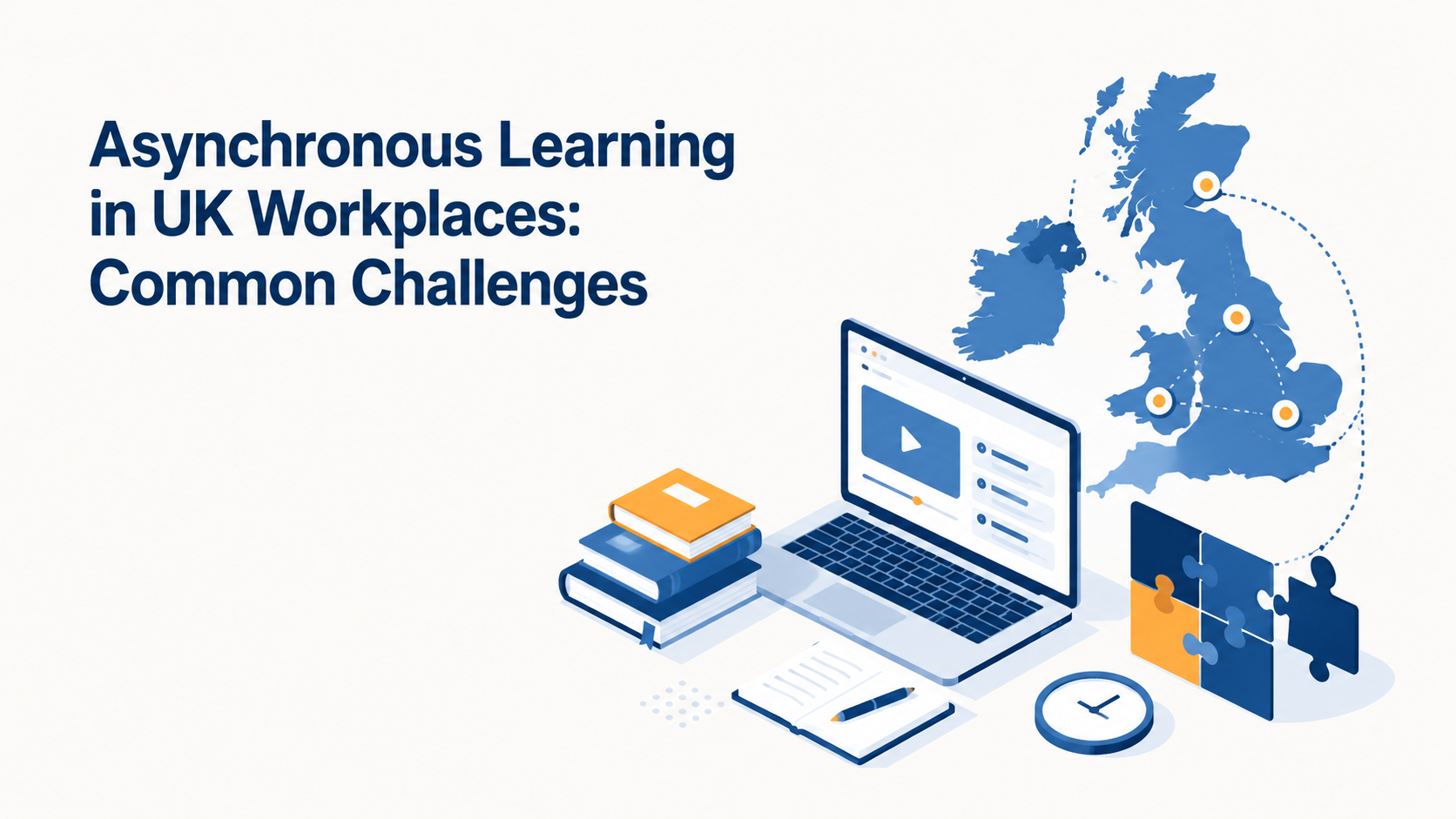
  • Asynchronous Learning in UK Workplaces: Common Challenges

    Asynchronous Learning in UK Workplaces: Common Challenges

    Why Asynchronous Learning Is Growing in the UK

    Flexible learning has become a standard part of workplace development across the UK. Whether employees are based in an office in Manchester, working remotely from home, or splitting their time between locations, organisations increasingly need training that can fit around different schedules.

    This is where asynchronous learning comes in. Instead of requiring everyone to attend a session at the same time, learners complete training independently when it suits them. E-learning courses, training videos, digital knowledge bases, workplace guides and on-the-job learning activities are all examples of asynchronous learning.

    The approach offers clear advantages. Employees can progress at their own pace, training can be tailored to different skill levels, and organisations can reduce the costs associated with classroom delivery. Well-designed digital learning can also improve engagement by allowing learners to access content when they are most ready to focus.

    However, flexibility alone does not guarantee success. Organisations must address several common challenges if they want asynchronous learning programmes to deliver meaningful results.

    Keeping Learners Engaged Without a Classroom Environment

    One of the biggest differences between asynchronous learning and instructor-led training is the absence of a shared learning experience. Learners are not sitting alongside colleagues, asking questions in real time, or participating in group discussions throughout the day.

    Without those interactions, some employees can feel disconnected from the learning process. Engagement may fall, particularly if training consists only of reading materials or lengthy presentations.

    The solution is to build interaction into the learning experience. Custom e-learning courses can include scenario-based activities, knowledge checks, reflective exercises and collaborative tasks that encourage active participation. Organisations can also create opportunities for discussion through workplace learning communities, team meetings or dedicated learning channels.

    Many UK employers combine asynchronous learning with occasional live sessions. A short virtual question-and-answer session or coaching workshop can provide valuable human interaction without sacrificing flexibility.

    Supporting Learners Who Need More Structure

    The freedom to learn at any time is one of the main attractions of asynchronous learning. At the same time, that freedom can create difficulties for employees who struggle with prioritisation, time management or motivation.

    Some learners thrive when given autonomy. Others need more guidance to stay on track.

    Organisations can improve completion rates by establishing clear expectations from the outset. Learners should understand why the training matters, what outcomes are expected, and when activities need to be completed. Breaking content into shorter microlearning modules can also make training feel more manageable, especially for employees balancing learning with busy workloads.

    Regular communication from managers and learning teams helps maintain momentum. Simple progress reminders, milestone check-ins and individual support can prevent learners from falling behind.

    Providing Feedback at the Right Time

    Immediate feedback is one of the strengths of traditional classroom training. Learners can ask a question and receive clarification within seconds.

    In asynchronous programmes, there is often a delay between a learner encountering a problem and receiving an answer. This can create frustration and reduce confidence, particularly when employees are learning new processes or technical skills.

    Effective digital learning addresses this challenge by anticipating common questions. Frequently asked questions, knowledge resources and built-in guidance can provide support when learners need it most.

    Feedback should also be meaningful. Rather than simply marking an answer as correct or incorrect, training should explain why a choice was right or wrong. This approach helps learners understand the reasoning behind decisions and encourages long-term knowledge retention.

    Overcoming Technology Barriers

    Technology plays a central role in most asynchronous learning programmes. If systems are difficult to use, learners can become discouraged before they engage with the content itself.

    The first step is understanding how employees will access training. Some organisations provide company devices, while others rely on employees using their own equipment. Training platforms and content should work reliably across the devices and browsers learners are most likely to use.

    User experience also matters. Clear navigation, straightforward instructions and accessible design reduce confusion and support a better learning experience. Learning platforms such as the Capytech LMS can help by providing a central location for training, progress tracking and learner support.

    Organisations should also recognise that digital confidence varies significantly across the workforce. Providing technical guidance and access to support can remove barriers that might otherwise prevent participation.

    Meeting UK Compliance and Accessibility Expectations

    A consideration that is often overlooked is compliance. Organisations delivering digital learning in the UK should ensure their systems and processes align with legal and accessibility requirements.

    Learner data must be handled in accordance with the UK GDPR and the Data Protection Act 2018. Employers should also consider accessibility standards so that employees with different needs can participate fully in training activities.

    Accessibility is not simply a compliance exercise. Features such as captions, transcripts, keyboard navigation and clear content structure improve the learning experience for everyone. Organisations that design inclusively often see higher engagement and completion rates across their workforce.

    Making Asynchronous Learning Work

    Asynchronous learning gives organisations a practical way to deliver training at scale while accommodating different schedules, locations and learning preferences. The flexibility it offers is one of its greatest strengths, but it also introduces challenges that need to be managed carefully.

    By creating engaging content, providing clear structure, offering timely feedback, supporting learners with technology and maintaining compliance with UK requirements, organisations can achieve strong results from asynchronous learning programmes.

    When combined with high-quality digital learning design and the right learning platform, asynchronous learning can become a highly effective part of a wider workplace learning strategy.

    See your own training as e-learning, free

    Send us one document and we will turn it into an interactive demo module, so you can judge the quality before you spend anything.
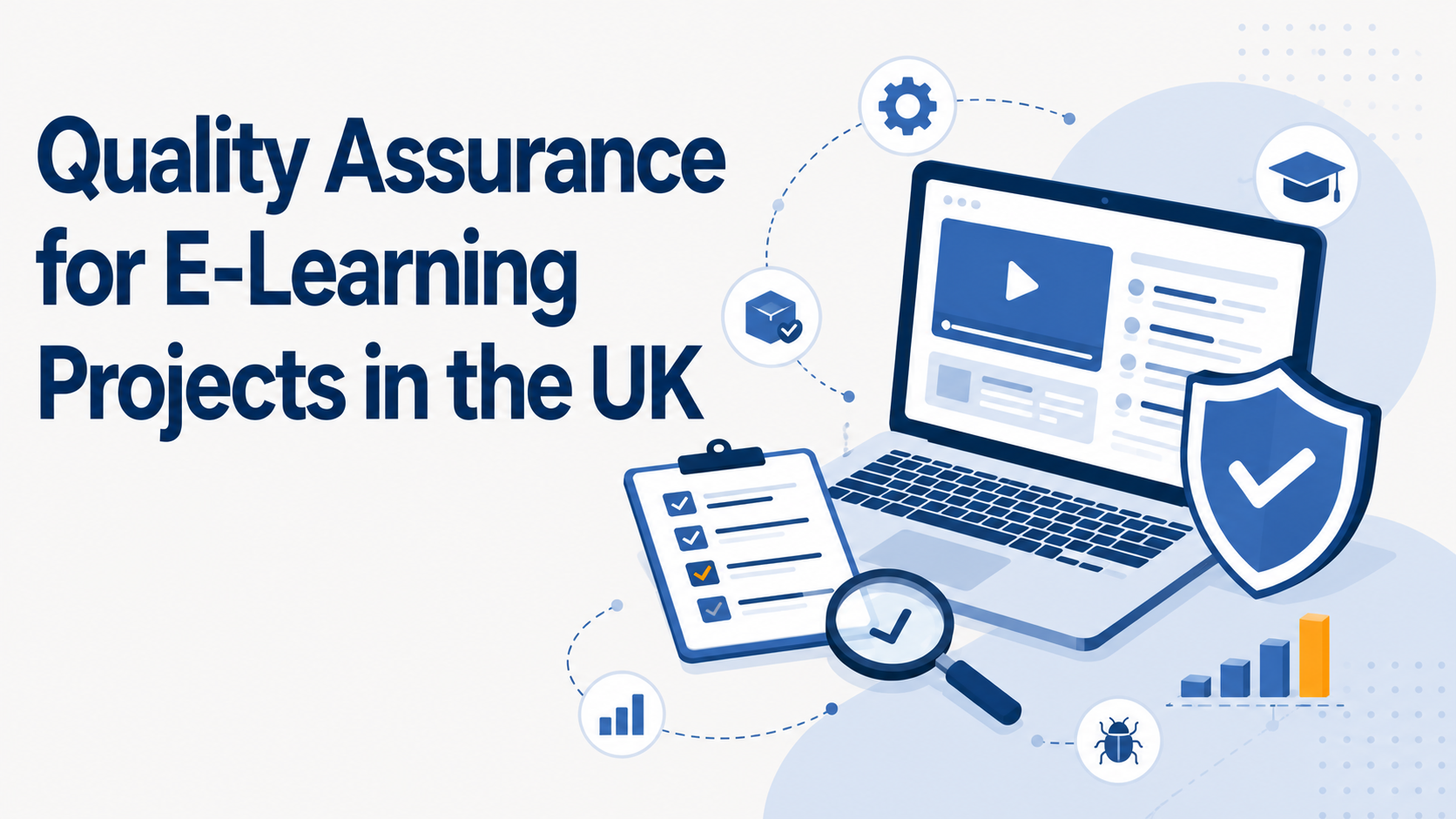
  • Quality Assurance for E-Learning Projects in the UK

    Quality Assurance for E-Learning Projects in the UK

    Creating effective digital learning is about more than producing attractive content and interactive experiences. Whether you’re rolling out compliance training for a local authority, onboarding programmes for a growing business, or leadership development across a national organisation, quality matters at every stage.

    A single broken link, inaccurate statement, or confusing learner journey can reduce engagement and weaken learning outcomes. That is why quality assurance should be built into every e-learning project from the beginning, rather than treated as a final task before launch. The following practices can help UK organisations deliver learning that is accurate, reliable, and effective.

    Build Quality into the Development Process

    One of the most common mistakes in e-learning development is leaving testing until the course is nearly complete. This often results in a long list of issues that are difficult and expensive to resolve.

    A better approach is to review and test throughout the project lifecycle. Each draft, prototype, and content update should be assessed before moving forward. Continuous quality checks reduce rework and make final approval much more straightforward.

    Review Every Learning Component

    E-learning courses contain many moving parts, and each element deserves attention during testing.

    Content should be checked for accuracy, spelling, grammar, and clarity. Graphics should reflect current branding and support the learning objectives. Video assets need reviewing for quality, subtitles, and playback performance. Audio should be clear, balanced, and free from technical issues. Navigation controls, menus, and interactive elements should work consistently across the course.

    Small issues in any of these areas can create frustration for learners and undermine confidence in the training.

    Use Structured Testing Criteria

    A documented QA checklist helps ensure consistency across reviews. It also prevents important checks from being overlooked when multiple people are involved in testing.

    Rather than relying on memory, reviewers can work through agreed criteria covering functionality, content accuracy, accessibility, branding, learner experience, and technical performance. This creates a more organised review process and makes it easier to compare feedback from different stakeholders.

    Test the Learner Journey

    A technically correct course can still perform poorly if learners struggle to understand what to do next.

    Walk through the programme as though you are seeing it for the first time. Check whether instructions are clear, whether progression feels logical, and whether users can complete activities without unnecessary confusion. Assessments, feedback messages, and navigation should all contribute to a smooth learning experience.

    The objective is not simply to make the course work, but to make it intuitive.

    Involve Independent Reviewers

    People who have worked closely on a project often become familiar with its content and structure. As a result, they can miss issues that are immediately obvious to someone approaching the course with fresh eyes.

    Independent reviewers bring a different perspective. They often identify unclear wording, usability concerns, and gaps in learner guidance that internal project teams may overlook. Including external reviewers at key stages can significantly improve course quality.

    Bring Subject Matter Experts Back into the Process

    Subject matter experts typically contribute during content development, but their role should not end there.

    Before launch, SMEs should review the completed course to confirm that information remains accurate, complete, and relevant. This is particularly important for regulated sectors, technical training, health and safety content, and compliance programmes where incorrect information can create business risk.

    SMEs can also provide valuable feedback on whether key concepts are explained clearly enough for the intended audience.

    Create a Representative Pilot Group

    Before releasing training across an organisation, it is helpful to test it with a smaller group of users.

    A pilot group should include learners from the target audience, line managers, and relevant stakeholders. Their feedback can reveal technical issues, content gaps, and areas where the learning experience could be improved.

    Pilot testing also provides early evidence of whether the course is likely to achieve the intended learning outcomes before wider deployment.

    Establish a Strong Feedback Process

    Finding issues is only useful if there is a reliable way to capture and act on them.

    Reviewers and pilot users should have a simple method for reporting bugs, suggesting improvements, and highlighting concerns. Feedback should be recorded, prioritised, and reviewed regularly by the project team.

    Clear communication helps maintain engagement from testers and ensures that valuable insights are not lost.

    Respond Quickly, but Make Considered Decisions

    When feedback arrives, deal with it promptly. Leaving issues unresolved often creates bottlenecks and increases the workload later in the project.

    That said, not every suggestion should automatically be implemented. Teams should analyse each issue, assess its impact on learning objectives and learner experience, then decide on the most appropriate response. Sometimes the best course of action is to make a different improvement than the one originally suggested.

    Check Compliance and Accessibility Requirements

    For UK organisations, quality assurance should extend beyond content and functionality.

    Courses should be reviewed against accessibility requirements where appropriate, particularly within public sector environments. Accessibility checks may include keyboard navigation, colour contrast, screen reader compatibility, and captioning.

    Where learner data is collected, organisations should also ensure compliance with UK GDPR and the Data Protection Act 2018. Reviewing these requirements during QA can help avoid issues after deployment.

    Measure Against the Intended Outcome

    One useful lesson from highly regulated industries is the concept of assessing whether a product achieves its intended purpose.

    The same principle applies to e-learning. A course may be free from technical faults and visually polished, yet still fail to deliver meaningful results. Quality assurance should therefore include an evaluation of whether the training supports the original learning objectives and contributes to the desired business outcomes.

    For example, if a programme was designed to improve workplace safety, leadership capability, or compliance awareness, testing should consider whether learners are likely to achieve those outcomes, not simply whether the course functions correctly.

    Make Quality Assurance a Core Project Activity

    Successful e-learning projects treat quality assurance as an ongoing discipline rather than a final-stage exercise. Regular testing, structured reviews, learner feedback, and outcome-focused evaluation all contribute to a stronger learning experience.

    Whether you are developing custom e-learning, deploying training through the Capytech LMS, or creating programmes supported by AI-powered learning tools, a consistent QA process helps ensure learners receive training that is accurate, engaging, and capable of delivering measurable results.

    See your own training as e-learning, free

    Send us one document and we will turn it into an interactive demo module, so you can judge the quality before you spend anything.

  • Active Learning in UK Workplace Training: Why It Works

    Active Learning in UK Workplace Training: Why It Works

    Most UK employers have experienced the same challenge. Staff complete a training course, pass the assessment, then struggle to apply what they learnt a few weeks later. The training was delivered, but the knowledge did not stick.

    At the same time, employees quickly become confident with systems they use every day, whether that’s a CRM platform, a workplace process, or a customer service procedure. The difference often comes down to participation. People tend to remember far more when they are actively involved in learning rather than simply receiving information.

    Active and Passive Learning Explained

    Passive learning happens when learners absorb information through reading, watching, listening, or observing. Traditional presentations, recorded videos, policy documents, and instructor-led lectures are all common examples. The learner receives information but has limited interaction with it.

    Active learning takes a different approach. Learners participate in the process by solving problems, making decisions, discussing ideas, practising skills, or applying knowledge to realistic situations. Rather than being spectators, they become involved in the learning experience itself.

    Both approaches have a place within workplace learning. There are situations where passive learning is efficient, particularly when introducing information or communicating factual content. However, when organisations want employees to understand, retain, and apply knowledge, active learning often produces stronger results.

    Why Active Learning Improves Knowledge Retention

    One of the biggest advantages of active learning is that it helps people move beyond memorisation. Instead of simply recalling information, learners use it in context.

    When employees apply concepts to realistic situations, they create stronger mental connections. This process helps information remain accessible long after training has ended. It also makes it easier for learners to recognise when and how to use their knowledge in real workplace scenarios.

    For example, reading a customer service guide may explain the principles of handling complaints. Working through a realistic customer scenario requires learners to think, make decisions, and see the consequences of those decisions. That experience is often far more memorable.

    Building Confidence and Better Decision-Making

    Many workplace situations do not follow a script. Managers, team leaders, customer-facing staff, and operational teams regularly encounter challenges that require judgement rather than simple rule-following.

    Active learning helps employees develop these skills. By analysing situations, testing solutions, and reflecting on outcomes, learners strengthen their ability to think critically and adapt when circumstances change.

    This is particularly valuable in areas such as leadership development, health and safety, compliance, customer service, and workplace communication. Employees gain experience applying knowledge rather than simply recalling facts from a training session.

    The Impact on Employee Engagement

    Training programmes are more effective when learners are interested and involved. Passive learning can sometimes feel like an administrative exercise, particularly when employees are expected to work through large amounts of content without interaction.

    Active learning encourages participation. Learners make decisions, solve challenges, answer questions, and receive feedback throughout the process. This keeps attention levels higher and creates a more positive learning experience.

    For organisations investing in digital learning, higher engagement often leads to better completion rates, improved knowledge retention, and greater confidence when applying new skills on the job.

    How UK Organisations Are Using Active Learning

    Across the UK, organisations are increasingly incorporating active learning techniques into digital training programmes. NHS Trusts, local authorities, private sector employers, and training providers are all looking for ways to make learning more practical and relevant.

    This shift aligns with recommendations from professional bodies such as the CIPD, which consistently highlights the importance of effective workplace learning and ongoing skills development.

    For many employers, the goal is not simply to deliver training. It is to create learning experiences that influence behaviour and improve performance in the workplace.

    Practical Ways to Make E-Learning More Active

    Modern e-learning platforms make it much easier to build active learning experiences at scale.

    Scenario-based activities remain one of the most effective methods. Learners are presented with realistic workplace situations and asked to make choices that influence the outcome. This encourages application of knowledge rather than passive observation.

    Interactive assessments can also play an important role. Instead of providing only right-or-wrong answers, effective assessments explain why responses are correct and offer additional guidance when learners make mistakes.

    Interactive video content provides another opportunity to increase participation. Learners can make decisions, answer questions, or explore different pathways throughout the video experience.

    Gamified features, such as achievement badges, progress tracking, and learning challenges, can further encourage participation and help maintain motivation.

    Many organisations also combine digital learning with workplace practice. Giving employees opportunities to apply new skills during their normal working week helps reinforce learning and build confidence.

    Creating an Active Learning Culture

    Improving learning outcomes does not require a complete overhaul of an existing training programme. Small changes can make a significant difference.

    Adding more interaction to online courses, introducing practical exercises, and encouraging discussion and reflection can all increase learner participation. Organisations using platforms such as the Capytech LMS can also track engagement and identify opportunities to strengthen learning experiences over time.

    The most successful training programmes recognise that learning is not something that happens to employees. It is something employees actively participate in. When people are involved in the process, they are more likely to remember what they learnt, apply it effectively, and deliver better results for the organisation.

    See your own training as e-learning, free

    Send us one document and we will turn it into an interactive demo module, so you can judge the quality before you spend anything.