
Running a business often feels like an endless cycle of meetings, emails and deadlines. By Friday afternoon, it’s easy to realise you’ve spent the entire week responding to immediate demands without making meaningful progress on your longer-term goals.
For many UK organisations, especially those investing in digital learning and workforce development, success depends on creating time for strategic thinking. Stepping away from day-to-day pressures allows leaders to make better decisions about growth, innovation and where their organisation should be heading over the coming years.
Why urgent work always wins
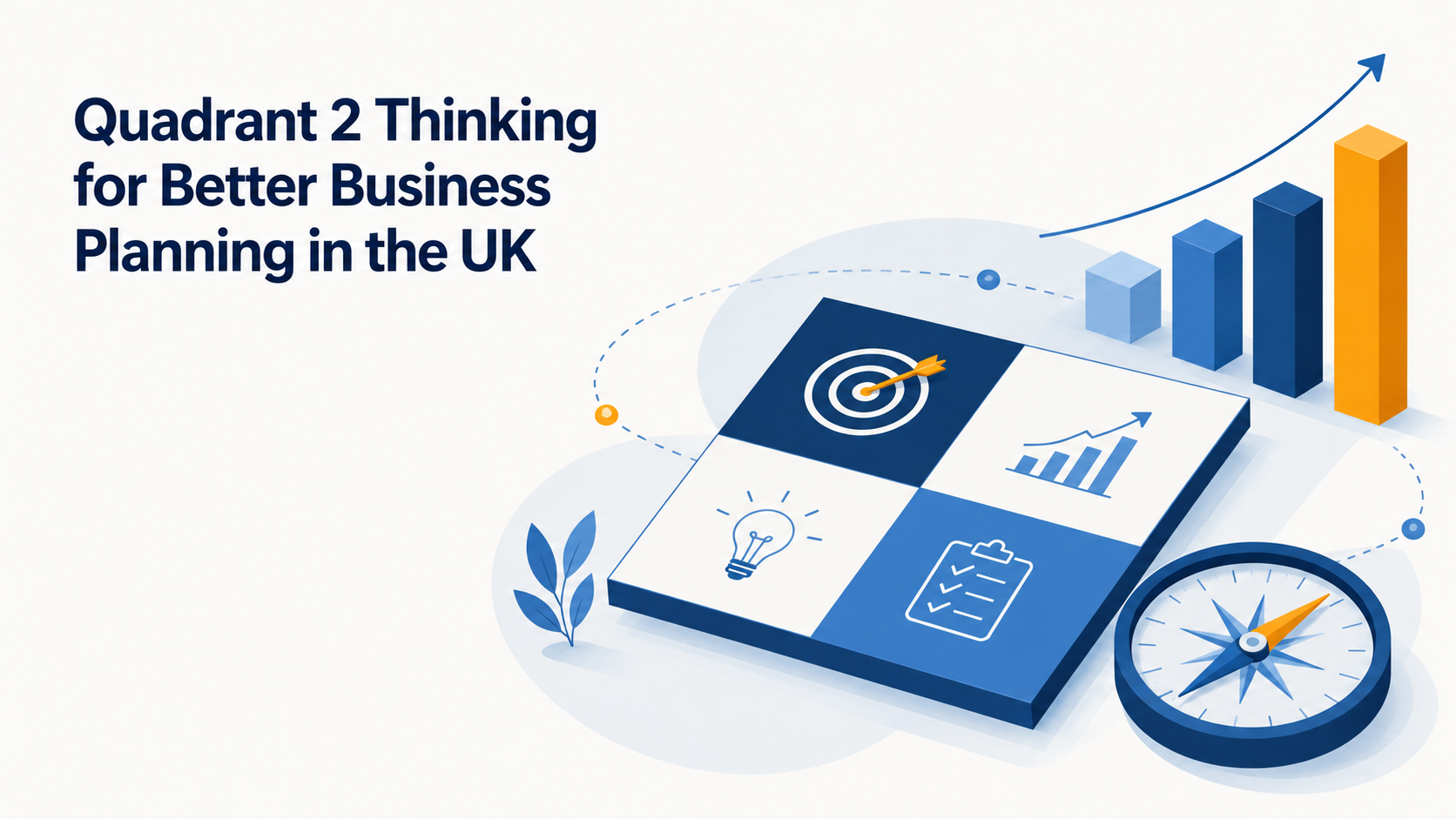
The well-known Eisenhower Matrix divides work into four categories based on urgency and importance. Most people naturally spend their time dealing with urgent and important tasks, while also responding to interruptions that feel urgent but contribute little to long-term success.
There is nothing wrong with handling pressing issues. Sales opportunities, client proposals and operational decisions all matter. The challenge comes when every day becomes reactive. If your calendar is permanently full of immediate priorities, strategic planning rarely gets the attention it deserves.
The value of Quadrant 2 thinking
Quadrant 2 focuses on work that is important but not yet urgent. This is where organisations plan for future growth, improve processes and invest in capability rather than simply maintaining current performance.
For businesses delivering workplace learning, this might involve developing a long-term digital learning strategy, reviewing learner engagement, investing in AI-powered learning tools or planning new custom e-learning programmes. These activities may not require immediate action, but they often produce the greatest impact over time.
Making space for this type of thinking provides greater clarity. Instead of reacting to the next problem, you begin making deliberate decisions that shape the direction of the business.
Strategic planning creates better outcomes
Many business leaders recognise the feeling of spending weeks focused on proposals, customer enquiries and operational issues. While these activities generate revenue and keep projects moving, they can leave little time to consider where the organisation should be in one, three or even five years.
Setting aside dedicated time for strategic planning changes that perspective. It becomes easier to identify the services that deliver the greatest value, understand which markets offer the strongest opportunities and decide where future investment should be directed.
For Capytech, that means continuing to help UK organisations improve workplace learning through custom e-learning, the Capytech LMS, FastTrack, AI-powered learning solutions and IOSH-approved safety training.
A UK perspective on long-term planning
UK employers are placing increasing emphasis on workforce capability, compliance and continuous professional development. Guidance from organisations such as the CIPD encourages employers to think beyond immediate performance and build learning cultures that support sustainable growth.
Whether you’re working with a local authority, an NHS Trust, a manufacturer or a professional services firm, the principle remains the same. Organisations that regularly invest time in planning are often better prepared for change than those that only react when problems arise.
Building learning strategies, reviewing skills gaps and planning future training initiatives are all examples of Quadrant 2 activities that strengthen organisations over time.
Make time before it becomes urgent
Strategic thinking rarely appears on your to-do list because it doesn’t usually demand immediate attention. That is exactly why it deserves a place in your schedule.
Blocking out regular time each month to review business goals, learning priorities and future opportunities can prevent reactive working from becoming the norm. Over time, those small investments in planning can have a significant influence on growth, employee development and organisational resilience.
Quadrant 2 thinking is not about ignoring today’s priorities. It’s about ensuring tomorrow’s opportunities receive the attention they deserve before they become tomorrow’s problems.
See your own training as e-learning, free
Send us one document and we will turn it into an interactive demo module, so you can judge the quality before you spend anything.