Blog
-
Imagine an organisation rolling out mandatory safety training to 500 employees. A learner scores 80% on the final quiz, but the questions they got wrong relate to a high-risk procedure. Should they automatically pass? This is why choosing a pass mark for an e-learning quiz should involve more than selecting the default percentage in your…

-
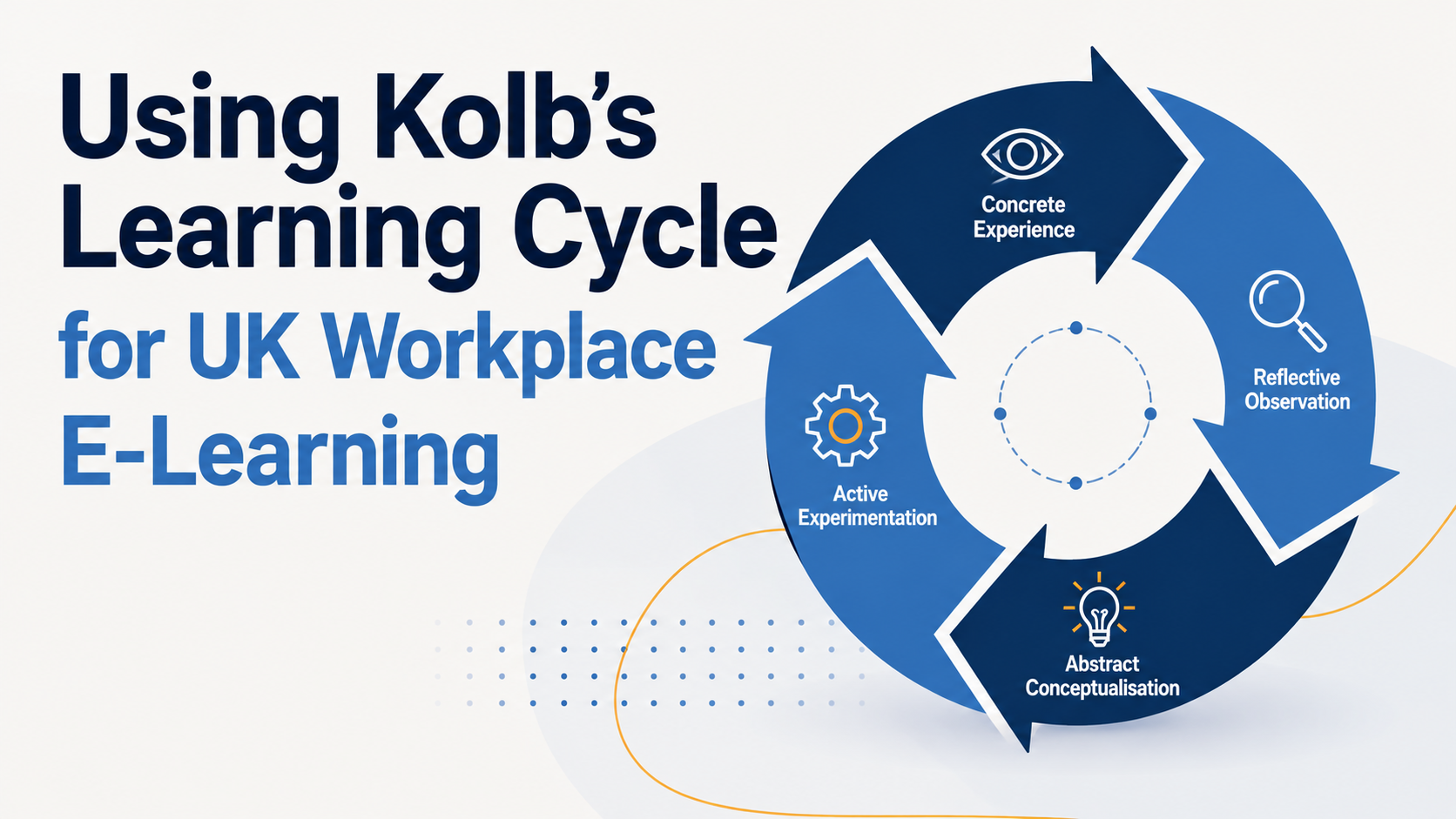
Imagine a new employee joining an NHS Trust, local council or private business. They can read a policy, complete a quiz and score 100%, but what happens when they face the same situation at work? Knowing the information is one thing. Knowing how to use it under pressure is another. This is where experiential learning…
-
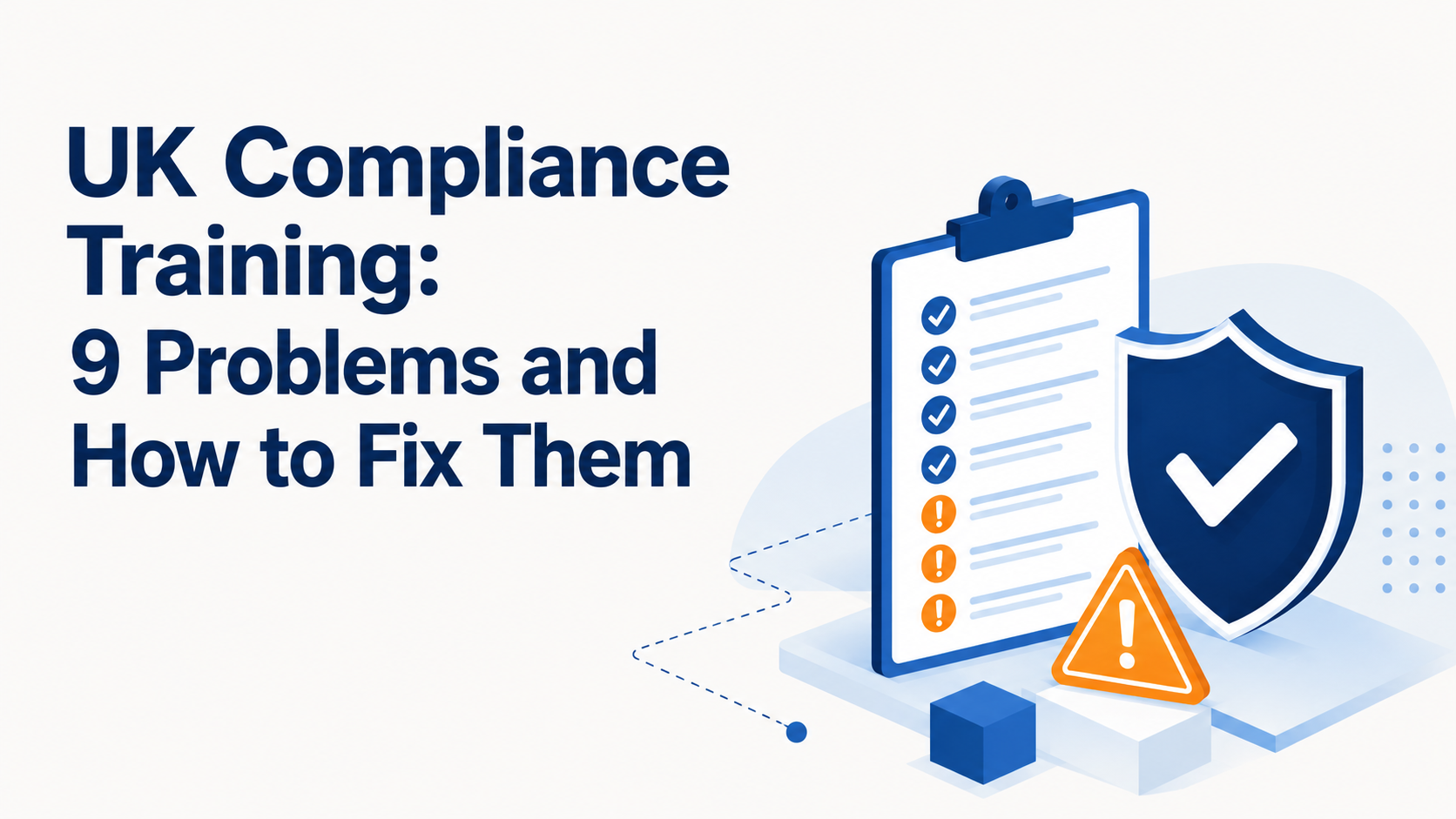
Compliance training is rarely the first item on an employee’s wish list. Whether it covers data protection, health and safety, fraud prevention or workplace conduct, mandatory training can quickly become something people click through simply to get it finished. For UK organisations, however, effective compliance training is about more than ticking a box. Poor training…
-
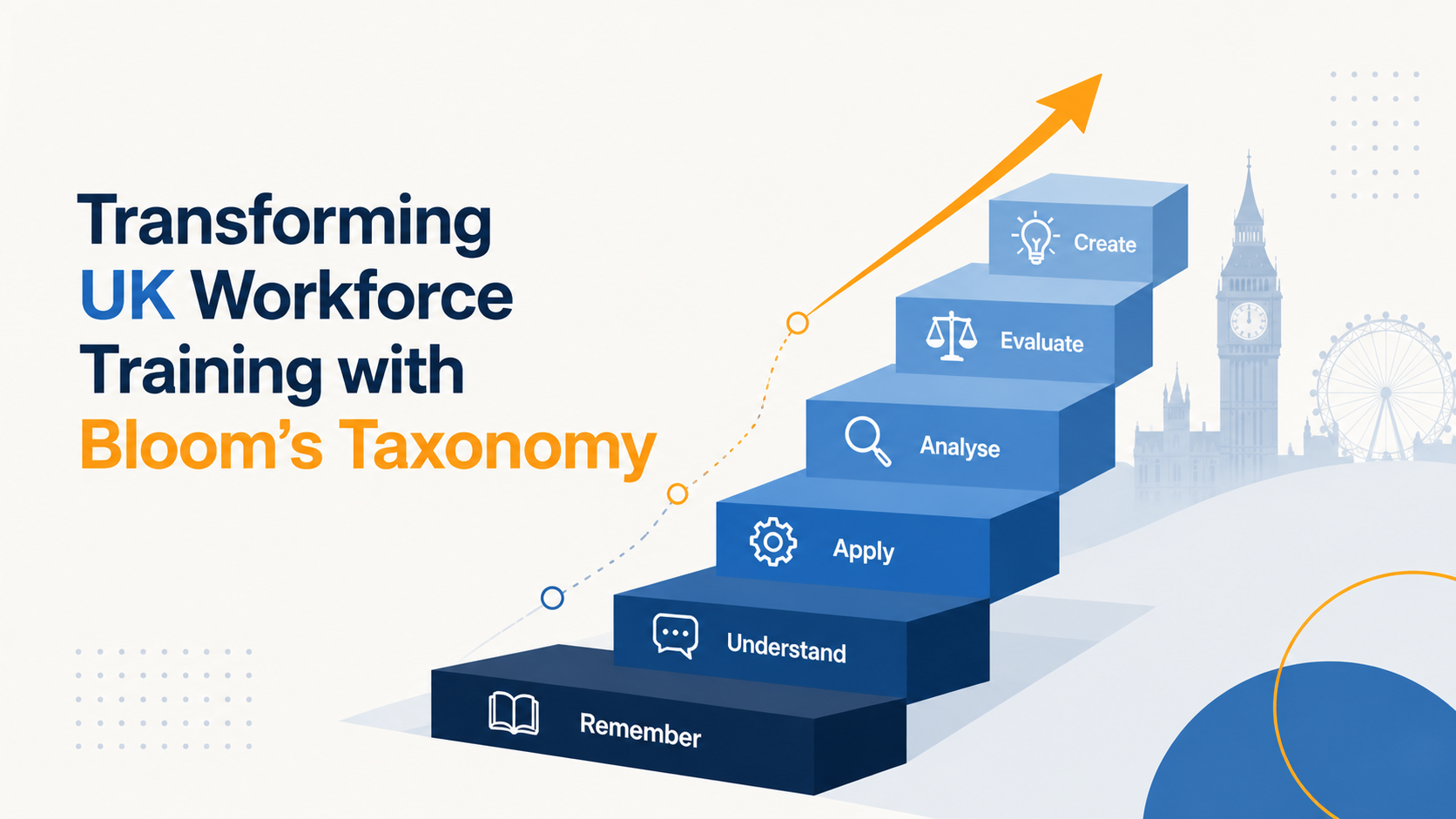
Welcome to the second installment in our guide to key instructional design frameworks for digital learning. In this post, we explore Bloom’s Taxonomy, a foundational pedagogical model widely used across the UK education and corporate sectors. From FTSE 100 businesses in London to NHS Trusts and regional councils, structuring training around clear cognitive steps is…
-
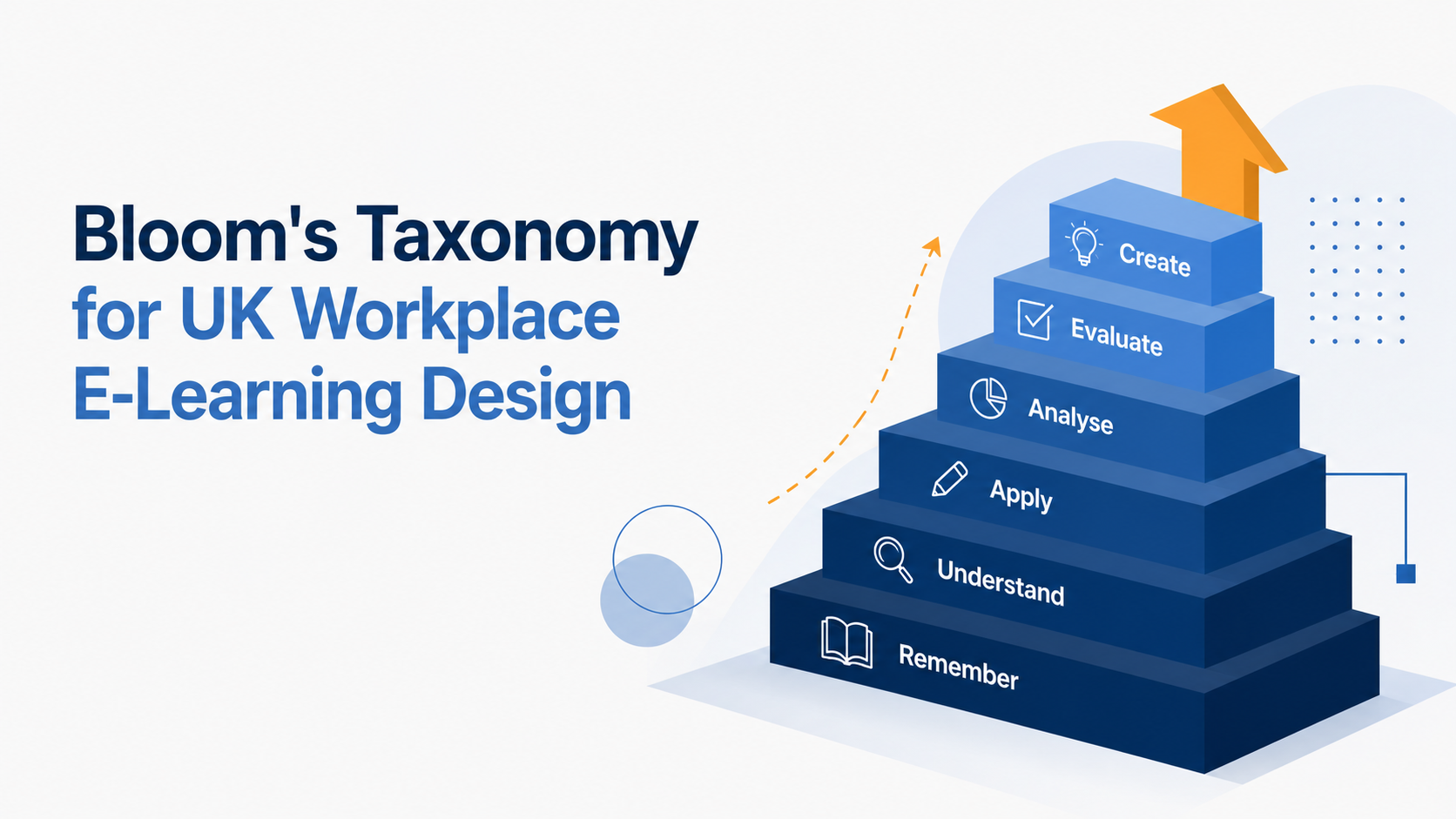
Good workplace learning does more than help people remember information. It should give employees the confidence to apply new knowledge, solve problems, make informed decisions, and improve the way they work every day. That is why many UK organisations use instructional design frameworks that focus on measurable learning outcomes rather than simply delivering content. Bloom’s…
-
Every successful workplace learning programme begins with a simple question. Why do employees need this training in the first place? Many organisations invest significant time and budget into e-learning without first identifying the real performance issue they are trying to solve. The result is often a course that delivers information but fails to change behaviour…

-
Many UK organisations invest in workplace learning with clear business goals in mind. They may want to improve compliance, develop leadership skills, reduce errors or help teams adopt new systems. Yet many training programmes fall short because employees are never told exactly what success looks like. That is where learning objectives make a difference. A…

-
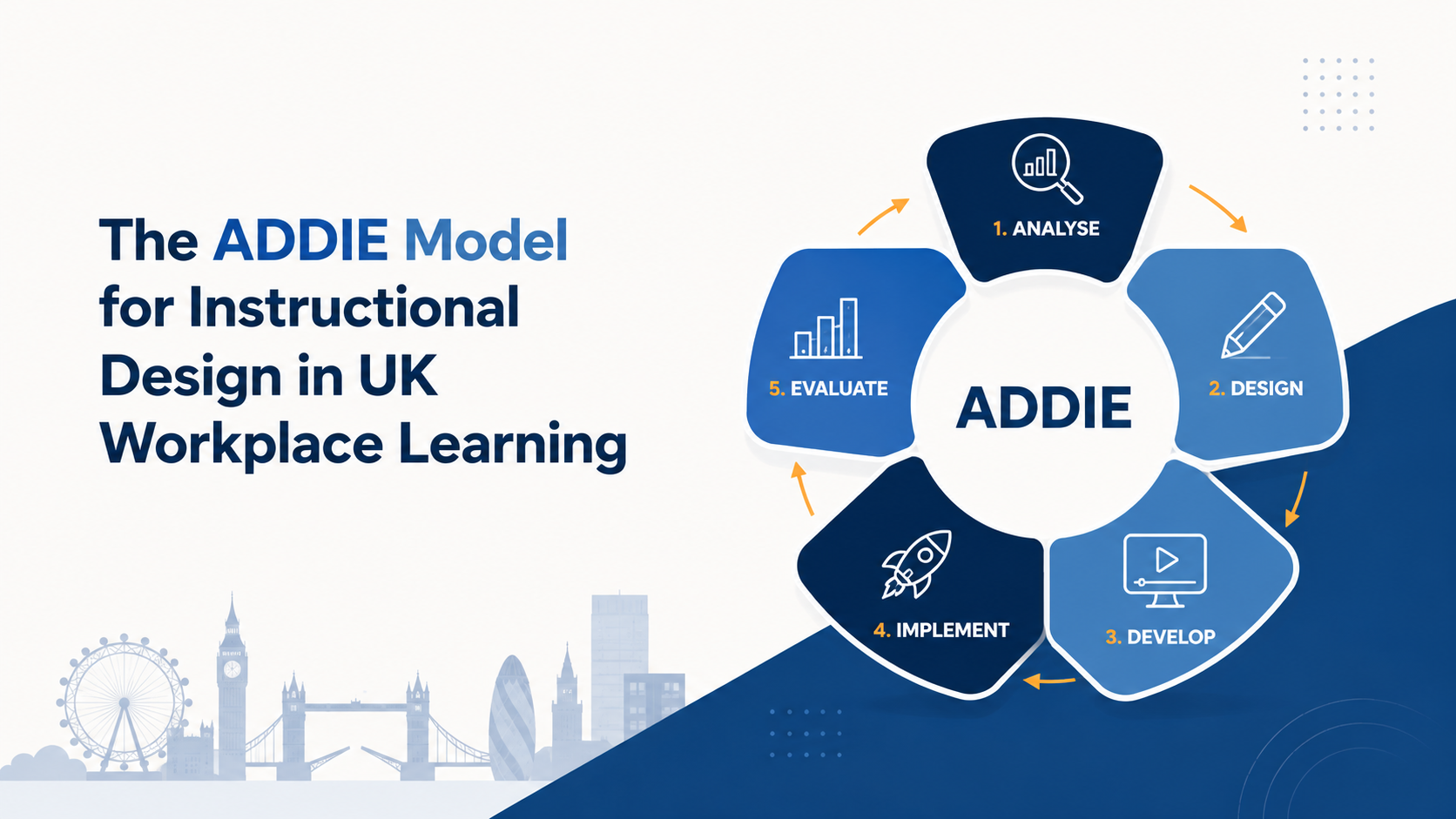
Many UK organisations are investing more in digital learning, whether they are onboarding new employees, delivering compliance training or supporting professional development. Yet successful e-learning is about much more than attractive content. Without a structured design process, even well-produced courses can fail to improve knowledge or change behaviour. That is why instructional design models remain…
-
Many UK organisations invest in workplace learning with a clear goal, helping employees perform better in their roles. Yet even well-designed digital training can struggle if learners lose interest, forget key information, or cannot apply what they have learnt once they return to work. That is why instructional design frameworks remain so valuable. Rather than…

-
Selecting an e-learning developer is one of the biggest decisions you’ll make when planning a digital learning project. Whether you’re creating compliance training for a manufacturing business in Birmingham, onboarding programmes for a growing technology company in Manchester, or professional development for a public sector organisation, the quality of your chosen partner will directly affect…